
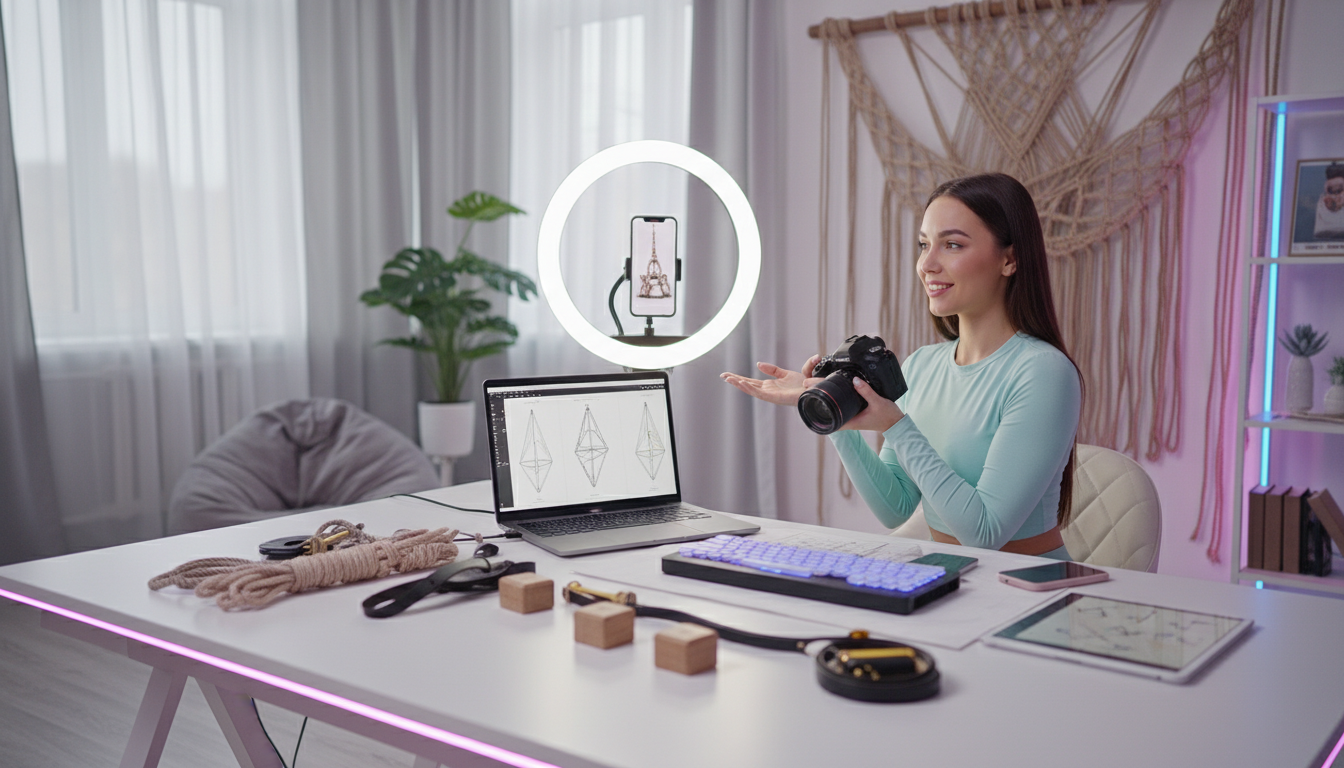
Workshops and Training for Bondage Art
Workshops and Training for Bondage Art: A Professional Development Guide
Whether you're an aspiring bondage model, photographer, or rigger seeking to develop your skills professionally, formal workshops and training provide essential education in technique, safety protocols, and artistic expression. This comprehensive guide explores the landscape of bondage workshops and training, helping you identify quality learning opportunities, understand what to expect from rope bondage classes, and navigate the path from beginner to professional practitioner. For those serious about building a career in bondage modeling or related fields, structured education through fetish seminars and workshops is an investment in both safety and artistic credibility.
Prerequisites for Bondage Art Training
Before enrolling in bondage workshops and training programs, consider these foundational requirements:
- Age and Legal Status: You must be 18+ years old with valid identification
- Physical Health Assessment: Understanding of your mobility limitations, joint conditions, or circulation issues
- Consent Education Foundation: Basic understanding of negotiation and boundaries
- Open Communication Skills: Ability to articulate comfort levels and physical sensations
- Financial Investment: Budget for workshop fees, typically ranging from $50-500 per session
- Time Commitment: Availability for multi-hour sessions and potential practice time
Types of Bondage Workshops and Training Programs
Rope Bondage Classes for Different Skill Levels
Rope bondage classes represent the most common training format, structured by experience level:
Beginner Foundations focus on basic knots, single-column ties, and safety fundamentals. These introductory sessions typically last 2-4 hours and teach essential vocabulary, rope handling, and simple harnesses. Students learn to recognize nerve compression points and practice emergency release techniques.
Intermediate Applications advance to multi-point harnesses, partial suspensions, and aesthetic refinement. These rope bondage classes assume familiarity with basic ties and emphasize body awareness, weight distribution, and communication during extended scenes.
Advanced Techniques explore full suspensions, dynamic movements, and complex transitions. These sessions require demonstrated competency and often include rigorous safety assessments before participation.
Specialized Fetish Seminars and Focused Workshops
Beyond rope work, fetish seminars cover specialized aspects of bondage art:
- Photography and Documentation Workshops: Learn lighting techniques, composition principles, and ethical documentation practices for bondage photography
- Model Training Intensives: Focus on poses, endurance building, body awareness, and professional conduct for working models
- Safety and Risk Management Seminars: Deep dives into anatomy, nerve pathways, circulation monitoring, and emergency protocols
- Business and Career Development: Marketing strategies, platform selection, legal considerations, and building a professional brand
- Historical and Cultural Context: Academic exploration of bondage traditions, particularly Japanese Shibari/Kinbaku heritage
Comparison of Training Formats and Learning Opportunities
| Training Format | Typical Duration | Cost Range | Best For | Skill Development Speed |
|---|---|---|---|---|
| In-Person Workshops | 2-8 hours | $75-300 | Hands-on learning, immediate feedback | Fast |
| Multi-Day Intensives | 2-5 days | $400-2000 | Immersive skill building, networking | Very Fast |
| Online Video Courses | Self-paced | $30-200 | Flexible scheduling, reference material | Moderate |
| Private Instruction | 1-3 hours | $100-500/session | Personalized attention, specific goals | Very Fast |
| Community Practice Groups | 2-4 hours | Free-$20 | Ongoing practice, peer learning | Slow but Sustained |
| Convention Workshops | 1-2 hours | $25-75 (or convention admission) | Exposure to multiple instructors | Moderate |
How to Choose Quality Bondage Training Programs
Selecting reputable learning opportunities requires careful evaluation:
Instructor Credentials and Experience
Research instructors' backgrounds thoroughly. Quality instructors typically have:
- Years of Practice: Minimum 5-10 years of active experience in their specialty
- Teaching History: Documented track record of workshop facilitation
- Community Standing: Positive reputation within bondage and kink communities
- Safety Record: No history of injuries or consent violations
- Continuing Education: Ongoing learning and skill development
Workshop Structure and Safety Protocols
Professional bondage workshops and training programs include:
- Clear pre-workshop communication about content and expectations
- Signed informed consent and liability waivers
- Defined boundaries around touching and demonstrations
- Safety monitors present during practice sessions
- Emergency scissors and first aid supplies visible and accessible
- Structured breaks to prevent fatigue-related injuries
- Follow-up resources and support after the workshop
Step-by-Step Process for Attending Your First Workshop
-
Research Available Options: Search for workshops in your geographic area or consider traveling to major cities with active bondage education communities. Check platforms like FetLife, Eventbrite, and specialized bondage education websites.
-
Read Reviews and Testimonials: Look for feedback from previous attendees. Contact past participants if possible to ask about their experiences.
-
Contact Organizers with Questions: Before registering, ask about class size, instructor-to-student ratio, what to bring, and specific topics covered. Professional organizers welcome questions.
-
Register Early: Quality rope bondage classes often fill quickly. Early registration may also offer discounted rates.
-
Prepare Physically and Mentally: Get adequate rest before the workshop. Eat a substantial meal. Wear comfortable, movement-friendly clothing. Bring water and any necessary medications.
-
Arrive with an Open Mind: Be prepared to learn slowly, make mistakes, and ask questions. Release expectations about mastering techniques immediately.
-
Practice Afterward: Schedule dedicated practice time within 48 hours of the workshop to reinforce learning. Continue regular practice to build muscle memory.
-
Seek Feedback: Return to the instructor or community practice groups with questions as you develop your skills.
Essential Skills Covered in Professional Training
Comprehensive bondage workshops and training address multiple competency areas:
- Technical Proficiency: Knot tying, rope management, tension control, and pattern execution
- Anatomical Knowledge: Understanding skeletal structure, nerve locations, pressure points, and circulation pathways
- Communication Protocols: Negotiation frameworks, check-in procedures, non-verbal signals, and safewords
- Risk Assessment: Identifying red flags, recognizing warning signs, and making real-time safety decisions
- Emotional Intelligence: Reading body language, managing scene energy, and providing aftercare
- Aesthetic Development: Composition, symmetry, line quality, and artistic expression
- Professional Ethics: Consent culture, community standards, documentation permissions, and reputation management
Regional and International Learning Opportunities
The bondage education landscape extends globally, with notable fetish seminars and training centers in:
- United States: Major cities like New York, Los Angeles, San Francisco, Seattle, and Austin host regular workshops. Organizations like The Rope Dojo, Twisted Tryst, and NOLA Rope Retreat offer established programs.
- Europe: Berlin, London, Amsterdam, and Barcelona feature thriving bondage education scenes with multilingual instruction.
- Asia: Tokyo remains the epicenter for traditional Kinbaku education, with increasing workshops in other major cities.
- Australia: Melbourne and Sydney host regular rope bondage classes and annual intensive events.
Common Challenges and Solutions in Bondage Training
Challenge: Feeling overwhelmed by technical complexity Solution: Focus on mastering one tie completely before moving to the next. Quality instructors emphasize depth over breadth for beginners.
Challenge: Physical discomfort or fatigue during practice Solution: Take breaks without guilt. Communicate immediately when experiencing discomfort. Build endurance gradually over months, not hours.
Challenge: Finding practice partners outside workshops Solution: Join local practice groups through FetLife or community centers. Many cities have regular "rope jams" for practitioners to meet and practice.
Challenge: Balancing learning costs with limited budgets Solution: Prioritize in-person beginner workshops for foundation, then supplement with lower-cost online resources. Volunteer at events for reduced admission or free workshops.
Challenge: Overcoming nervousness or self-consciousness Solution: Remember that everyone starts as a beginner. Quality workshops maintain supportive, judgment-free environments. Consider bringing a trusted friend to the first session.
Building Your Training Portfolio
For those pursuing professional careers in bondage modeling or rigging, strategic education planning matters:
- Document Your Training: Keep records of workshops attended, instructors studied with, and skills acquired
- Diversify Learning Sources: Study with multiple instructors to avoid single-perspective limitations
- Pursue Specialty Certifications: Some organizations offer certification programs that enhance professional credibility
- Attend Annual Conferences: Events like Shibaricon, Southwest Leather Conference, and Dark Odyssey provide intensive learning opportunities
- Seek Mentorship: Build relationships with experienced practitioners who can provide ongoing guidance
Online vs. In-Person Training Considerations
While online courses offer accessibility and convenience, in-person bondage workshops and training provide irreplaceable benefits:
In-Person Advantages:
- Immediate instructor feedback on technique
- Hands-on safety corrections
- Tactile learning about rope tension and body positioning
- Networking with community members
- Real-time problem-solving
Online Advantages:
- Geographic accessibility
- Self-paced learning
- Replayable content for review
- Lower cost barriers
- Privacy for initial exploration
The optimal approach combines both: foundational in-person training for safety and technique, supplemented by online resources for continued learning and reference.
FAQ: Workshops and Training for Bondage Art
Q: Do I need a partner to attend rope bondage classes?
A: Most workshops accommodate solo attendees and facilitate partner rotation during practice sessions. Some classes specifically focus on self-tying techniques. However, bringing a trusted partner can enhance learning through consistent practice and established communication. Check workshop descriptions, as some advanced classes may require pre-arranged partnerships.
Q: How do I know if a bondage workshop is legitimate and safe?
A: Legitimate workshops display clear safety protocols, provide instructor credentials, use written consent forms, maintain transparent communication about content, and receive positive community reviews. Red flags include instructors who pressure physical contact, lack safety equipment, avoid questions about experience, or create sexually charged environments without explicit consent. Trust your instincts and research instructors through community references.
Q: What should I bring to my first fetish seminar or rope workshop?
A: Bring 25-30 feet of 6mm natural fiber rope (if specified), water, small snacks, notebook and pen, safety scissors, comfortable layered clothing, any necessary medications, and an open mind. Some workshops provide rope for beginners. Avoid strong fragrances, as sensitivities vary. Contact organizers beforehand for specific requirements.
Q: How long does it take to become proficient enough to work professionally?
A: Achieving professional competency typically requires 1-3 years of consistent practice and ongoing education, depending on role specialization. Models may work professionally sooner while developing skills, whereas riggers need extensive training before accepting paid work. Professional status demands not just technical skill but also deep safety knowledge, emotional intelligence, and reputation building within the community.
Q: Are bondage workshops and training only for people in the kink lifestyle?
A: No. Many attendees pursue bondage education for artistic, photographic, performance, or theatrical applications without personal kink interest. Quality workshops welcome all motivations, including curiosity, artistic development, and professional skill building. The emphasis on consent, safety, and respect creates inclusive learning environments regardless of personal lifestyle choices.
Conclusion: Your Path Forward in Bondage Education
Investing in quality bondage workshops and training establishes the foundation for safe, skilled, and artistically satisfying practice, whether for personal exploration or professional career development. Begin with beginner-friendly rope bondage classes to build essential techniques and safety knowledge. As skills develop, pursue specialized fetish seminars that align with your specific interests and goals. Remember that bondage education is an ongoing journey—even experienced practitioners continue learning throughout their careers. Prioritize safety, respect consent absolutely, and approach learning with patience and humility. Your next step is researching workshops in your area, reaching out to instructors with questions, and committing to that first learning opportunity. The bondage art community values continuous education and welcomes sincere learners at every level.