
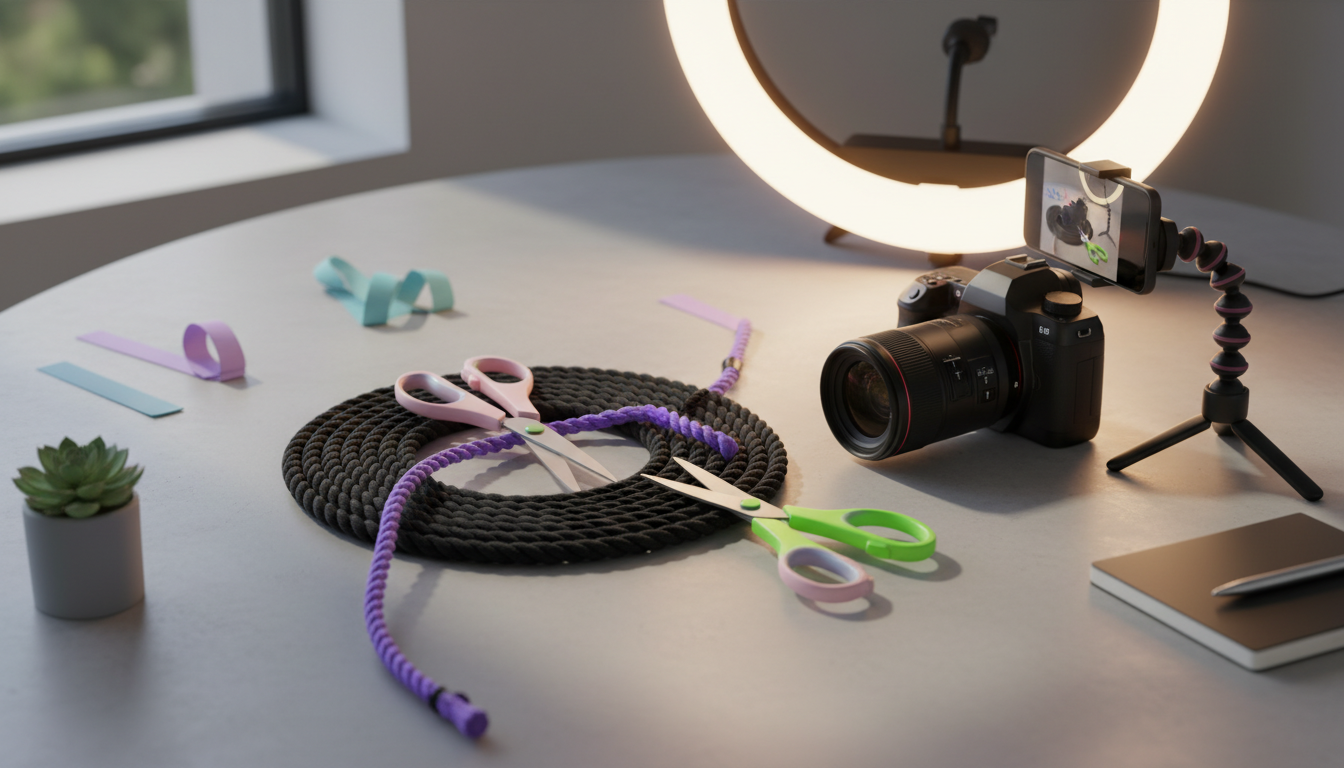
Why Safety Scissors Are Essential for Rope Bondage
Why Safety Scissors Are Essential for Rope Bondage
Rope bondage, including the intricate art of shibari, offers a profound way to explore trust, vulnerability, and artistic expression between consenting partners. However, the practice requires unwavering attention to safety protocols. Among all safety equipment, bondage safety scissors stand as the most critical tool every practitioner must have immediately accessible. This comprehensive guide explains why safety scissors are non-negotiable for rope bondage practitioners, how to select the right pair, and how to use them effectively in emergency situations. Whether you're a beginner learning basic ties or an experienced rigger creating complex suspension scenes, understanding rope bondage safety through proper equipment can prevent serious injuries and ensure every session remains safe and consensual.
Understanding Emergency Situations in Rope Bondage
Rope bondage inherently involves restricting movement and circulation, which creates scenarios where rapid release becomes medically necessary. Emergency situations can arise unexpectedly, including:
- Nerve compression: Numbness, tingling, or sharp pain indicating nerve impingement
- Circulation problems: Discoloration, coldness, or loss of sensation in extremities
- Panic responses: Psychological distress requiring immediate release
- Medical emergencies: Sudden health issues unrelated to bondage
- Equipment failure: Rope jams or knots that won't release normally
In these critical moments, fumbling with knots wastes precious seconds. Medical professionals emphasize that nerve damage can occur within minutes of compression, making speed essential. This is where specialized bondage safety scissors become invaluable—they enable cutting ropes safely within seconds, potentially preventing permanent injury.
Why Regular Scissors Are Dangerous for Rope Bondage
Many beginners mistakenly believe any scissors will suffice for emergency situations. This dangerous misconception can lead to additional injuries during rescue attempts. Regular household or craft scissors present multiple hazards:
- Sharp pointed tips that can puncture or lacerate skin when inserting under tight ropes
- Inadequate cutting power for thick or multiple rope strands, wasting critical time
- Poor leverage requiring excessive force that increases accident risk
- No safety features to protect the bound person during panicked cutting
- Unsuitable blade angles that make it difficult to position under ropes safely
Professional riggers and rope bondage safety experts universally recommend purpose-designed emergency medical scissors, also known as trauma shears or bandage scissors, specifically because they eliminate these dangers while maximizing cutting efficiency.
Essential Features of Bondage Safety Scissors
Blunt Tip Design
The most critical feature of proper bondage safety scissors is their blunt, rounded tip on the lower blade. This design allows you to safely slide the scissors between rope and skin without risking cuts or punctures. When someone is bound, their skin may be pressed tightly against the rope, leaving minimal clearance. The blunt tip acts as a protective barrier, pushing skin away as you insert the blade.
Angled Blade Configuration
Quality safety scissors feature an angled or offset blade design where the lower blade sits at approximately 45-60 degrees from vertical. This configuration provides several advantages:
- Creates space between the cutting edge and skin
- Allows easier insertion under multiple rope layers
- Provides better visibility of what you're cutting
- Reduces hand fatigue during rapid cutting
Serrated Lower Blade Edge
The serrated edge on the lower blade grips rope fibers, preventing slippage during cutting. This feature proves especially valuable when cutting synthetic ropes like nylon or polyester, which can be slippery. The serrations ensure each squeeze of the handles results in effective cutting rather than the rope sliding away from the blades.
Comparing Safety Scissors Options
| Feature | Medical Trauma Shears | EMT Scissors | Standard Bandage Scissors | Craft/Household Scissors |
|---|---|---|---|---|
| Blunt tip safety | Excellent | Excellent | Good | Poor/None |
| Cutting power (thick rope) | Excellent | Excellent | Moderate | Poor |
| Serrated grip | Yes | Yes | Sometimes | Rarely |
| Price range | $8-25 | $10-30 | $5-15 | $3-10 |
| Availability | Medical supply stores, online | Medical supply stores | Pharmacies | Anywhere |
| Recommended for bondage | Yes | Yes | Acceptable backup | Never |
How to Select the Right Safety Scissors for Your Practice
When purchasing bondage safety scissors, consider these specific requirements:
- Blade length: 7.5-9 inches provides optimal balance between cutting power and maneuverability
- Material quality: Stainless steel blades resist corrosion from cleaning and maintain sharpness
- Handle comfort: Ergonomic grips enable quick, firm handling even with sweaty or shaky hands
- Bright color: Fluorescent handles make scissors immediately visible in dim lighting or during emergencies
- Weight: Substantial enough to feel stable but not so heavy they're cumbersome
- Autoclavable: Medical-grade materials that withstand sterilization if needed
Testing Scissors Before Purchase
If possible, test safety scissors on your actual rope before committing to a pair. Quality scissors should cut cleanly through doubled 6mm jute rope with a single firm squeeze. If they require sawing motions or multiple attempts, they lack sufficient cutting power for emergency use.
Proper Placement and Accessibility of Safety Scissors
The Three-Second Rule
Professional rope bondage safety protocols follow the "three-second rule": you must be able to reach your safety scissors, position them under rope, and begin cutting within three seconds of recognizing an emergency. This requires strategic placement:
- Keep scissors outside the bondage area where they won't be knocked away or buried under rope
- Position within arm's reach of where you're working, not across the room
- Use consistent placement in the same location every session to build muscle memory
- Ensure visibility with bright-colored handles that immediately catch your eye
- Test accessibility before beginning each tie by reaching for them with your eyes closed
Many experienced practitioners attach safety scissors to their belt or keep them in a dedicated holster during sessions. Others place them on a nearby table with the handles facing outward for instant grabbing.
Multiple Pairs for Complex Sessions
For suspension bondage or scenes involving extensive ropework, consider having multiple pairs of safety scissors positioned at different locations. This redundancy ensures you can access cutting tools regardless of your position relative to the bound person. At minimum, keep:
- One pair within immediate reach of the working area
- One backup pair in a consistent, known location
- Consider a third pair for suspension work in case one falls
Cutting Techniques for Emergency Rope Release
Knowing how to use bondage safety scissors effectively is as important as having them available. Follow these steps for safe, rapid rope removal:
Basic Cutting Procedure
- Assess the situation quickly: Identify which ropes are causing the problem (usually those around affected limbs or torso)
- Communicate clearly: Tell the bound person "I'm going to cut you free now" to prevent panic
- Insert blade carefully: Slide the blunt tip under the rope, keeping it angled away from skin
- Cut strategically: Sever ropes that will provide immediate relief to the affected area first
- Work systematically: Continue cutting until the person is completely free and the emergency is resolved
- Provide aftercare: Check for injuries, monitor circulation, and provide emotional support
Strategic Cutting Locations
When cutting ropes safely, target these locations for maximum effectiveness with minimum cuts:
- Between wraps: Cut between rope layers rather than through multiple strands
- Away from knots: Knots are harder to cut through; slice the rope spans instead
- Tension points: Cut where rope is tightest for immediate pressure relief
- Single strands: When possible, cut single strands rather than bundled sections
Remember that you're not trying to preserve the rope—you're prioritizing human safety. Cut as many times as needed to achieve rapid, complete release.
Maintenance and Care of Safety Scissors
Regular Inspection
Before each bondage session, inspect your safety scissors for:
- Blade sharpness (should cut test rope cleanly)
- Secure rivet or screw connecting the handles
- Clean, rust-free blades
- Smooth opening and closing action
- Intact handle grips
Cleaning and Storage
Proper maintenance ensures your scissors function when needed:
- Wipe blades with alcohol after each session to remove rope fibers and oils
- Dry thoroughly to prevent rust formation
- Apply a drop of mineral oil to the pivot point monthly
- Store in a protective case or sheath to prevent damage
- Keep in a climate-controlled environment to avoid corrosion
Replacement Schedule
Even quality scissors eventually dull or degrade. Replace your bondage safety scissors:
- Every 2-3 years with regular use
- Immediately if they fail to cut test rope cleanly
- When the pivot becomes loose or wobbly
- If rust or corrosion appears on blades
- After any drop that might have damaged the alignment
Common Challenges and Solutions
Challenge: Scissors Seem Too Small for Thick Rope
Solution: Rather than purchasing oversized scissors that are unwieldy, develop technique. Cut individual strands sequentially rather than attempting to cut through multiple thick ropes simultaneously. Position the rope deeper into the blade throat where leverage is greatest.
Challenge: Difficulty Inserting Scissors Under Tight Rope
Solution: Approach from a shallow angle, almost parallel to the skin. Use your non-dominant hand to gently lift or create tension in the rope while inserting the scissors. In truly compressed situations, make a small cut on the outer edge first to create access space, then fully insert and cut.
Challenge: Partner Panicking When They See Scissors
Solution: Discuss emergency procedures during negotiation before any bondage begins. Show your partner the safety scissors, explain their purpose, and demonstrate their blunt tip design. This pre-session education reduces panic if scissors must be used.
Challenge: Forgetting to Position Scissors Accessibly
Solution: Create a pre-session checklist that includes "safety scissors positioned and tested." Make this as automatic as checking rope condition. Some practitioners place a bright reminder card where they prepare their rope that says "SCISSORS READY?"
Training and Practice Recommendations
Don't wait for an emergency to learn cutting techniques. Regular practice ensures you can act efficiently under pressure:
- Practice cutting rope under various conditions (loose, tight, wet, multiple layers)
- Time yourself to develop speed and confidence
- Practice with non-dominant hand in case your dominant hand is occupied
- Simulate emergency scenarios with a patient partner wearing clothing
- Attend workshops on rope bondage safety that include emergency response training
Many rope bondage communities offer safety-focused classes where participants practice emergency procedures. These sessions provide invaluable hands-on experience in a controlled environment.
FAQ About Safety Scissors and Rope Bondage
Q: Can I use regular medical bandage scissors from a pharmacy for rope bondage?
A: Standard bandage scissors can work as a backup option, but verify they have sufficient cutting power for your rope thickness. Test them on doubled rope before relying on them. Medical trauma shears or EMT scissors offer superior cutting force and are more reliable for thick natural fiber ropes like jute or hemp. The extra investment in purpose-designed trauma shears provides better peace of mind.
Q: How many times should I be willing to cut expensive rope to free someone?
A: Always cut as much rope as necessary without hesitation. No rope, regardless of cost, is worth risking someone's health or safety. Serious practitioners accept that rope is consumable safety equipment. Budget for rope replacement as part of your practice. Many experienced riggers keep dedicated "emergency practice rope" for training scenarios and fresher rope for actual sessions.
Q: Do I need safety scissors if I'm very experienced with knots and quick releases?
A: Absolutely yes. Even master-level riggers keep safety scissors immediately accessible because emergencies don't announce themselves or wait for careful untying. Panic, medical events, or simple human error can make knots impossible to release quickly. Safety scissors serve as essential backup for situations where untying isn't fast enough. Professional rope bondage safety standards require scissors regardless of skill level.
Q: Should scissors be sterilized between uses with different partners?
A: If scissors contact skin or bodily fluids, clean them thoroughly with appropriate disinfectant. For routine use where they only touch rope and clothing, wiping with alcohol is sufficient. If practicing with multiple partners in group settings or workshops, medical-grade sterilization is recommended. Always maintain basic hygiene standards for all equipment.
Q: What should I do with cut rope pieces during an emergency?
A: During an active emergency, ignore cut rope completely—let pieces fall where they may while focusing entirely on freeing the person and addressing the medical situation. Only after the person is safe, stable, and receiving appropriate care should you collect rope fragments. Never let tidiness concerns slow your emergency response. Rope can be cleaned up later; injuries cannot be undone.
Conclusion and Next Steps
Bondage safety scissors represent the single most important piece of safety equipment for rope bondage practitioners at every skill level. Their specialized design enables rapid, safe cutting that can prevent serious injuries during emergencies. By investing in quality trauma shears, positioning them accessibly, maintaining them properly, and practicing cutting techniques regularly, you create a crucial safety net for your rope bondage practice.
Take these immediate steps to enhance your rope bondage safety:
- Purchase medical-grade trauma shears or EMT scissors today if you don't already own them
- Test your current scissors on your actual rope to verify cutting power
- Establish a consistent placement location for scissors during sessions
- Practice emergency cutting techniques on scrap rope
- Discuss emergency procedures with partners before every session
- Consider taking a rope bondage safety workshop in your area
Remember that the goal of rope bondage is mutual enjoyment, artistic expression, and consensual power exchange—none of which are possible without prioritizing safety first. Safety scissors cost less than a medical emergency room visit and far less than permanent injury. They're not optional equipment; they're essential tools that demonstrate your commitment to responsible, ethical practice. Make cutting ropes safely a cornerstone of your rope bondage safety protocols, and you'll create an environment where both rigger and model can explore this beautiful art form with confidence and peace of mind.