
Improving Production Quality on a Budget
Improving Production Quality on a Budget
Whether you're an aspiring bondage model building your portfolio or an established performer looking to enhance your content, you don't need expensive equipment to create professional-quality productions. This comprehensive guide demonstrates how to significantly improve your bondage modeling content through budget-friendly production techniques, strategic investments, and creative problem-solving. By focusing on fundamentals like lighting, composition, and post-production, you can create compelling content that stands out on platforms and attracts quality bookings—all while keeping costs manageable.
Prerequisites
Before implementing these production improvements, ensure you have:
- A basic camera (smartphone cameras work excellently for starting out)
- A safe shooting space with adequate room for bondage setups
- Understanding of consent protocols and safety practices
- Basic familiarity with your chosen platforms' technical requirements
- A willing photographer or self-shooting setup with tripod
Understanding Production Value Fundamentals
What Makes Professional-Looking Content
Production quality in bondage modeling isn't about expensive gear—it's about mastering three core elements: lighting, composition, and post-production. Professional studios invest thousands in equipment, but the principles they follow can be replicated on minimal budgets. The key is understanding that viewers respond to clarity, mood, and visual storytelling rather than recognizing specific camera models or lighting brands.
Improving bondage production quality starts with identifying which elements most impact your specific content style. Artistic rope bondage photography benefits from dramatic lighting and careful composition, while educational content requires clear visibility and proper exposure. Assessment of your current work helps prioritize where improvements deliver maximum impact.
Budget-Friendly Production Equipment
DIY Lighting Solutions That Transform Your Shoots
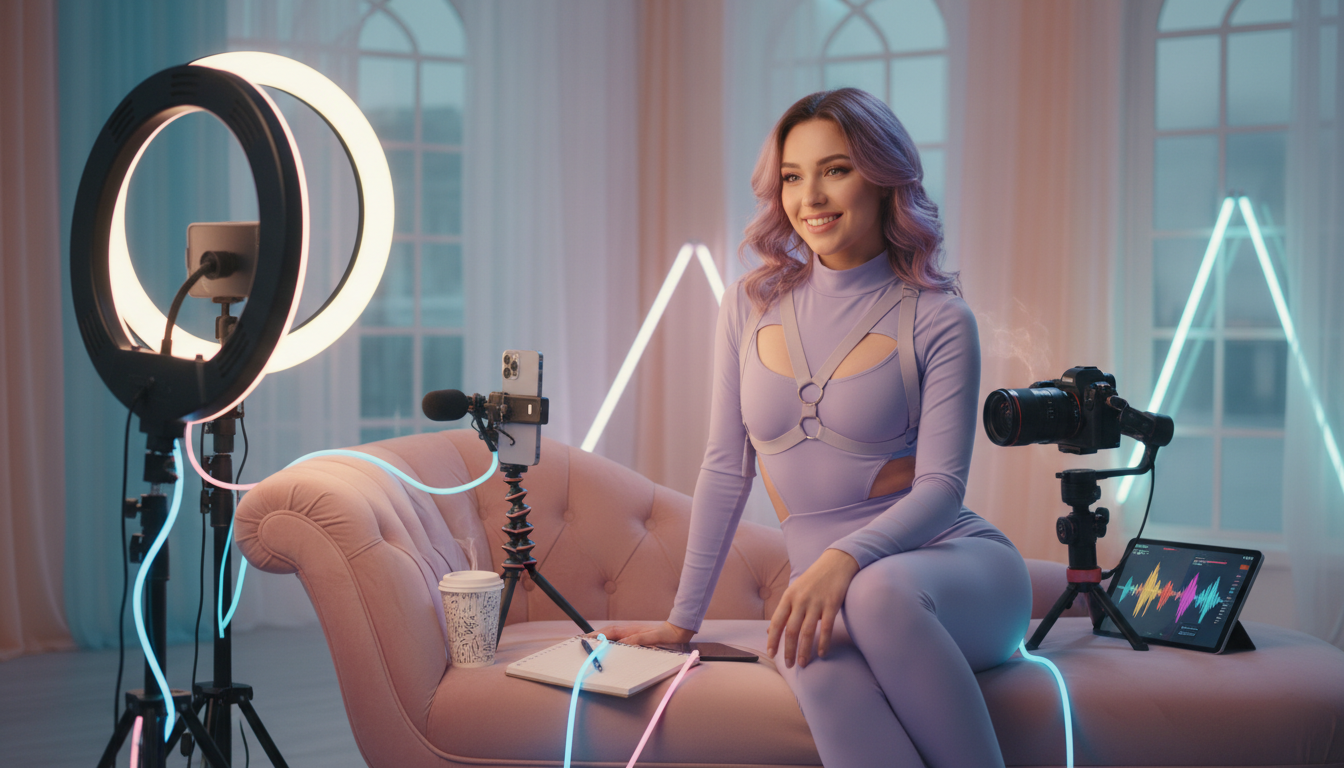
Lighting makes the single biggest difference in production quality, and DIY lighting setups can rival professional equipment at a fraction of the cost. Natural window light provides beautiful, soft illumination—position your subject near large windows during golden hour (the hour after sunrise or before sunset) for flattering, warm tones. Use white bedsheets or shower curtains as diffusers to soften harsh sunlight.
For controlled lighting regardless of time:
- Purchase inexpensive clamp lights from hardware stores ($10-15 each)
- Add daylight-balanced LED bulbs (5500K color temperature)
- Create diffusers using white fabric or parchment paper (never touch hot bulbs)
- Build reflectors from cardboard covered in aluminum foil
- Position one key light at 45 degrees to your subject, add a fill light opposite to reduce shadows
This basic three-point lighting setup (key, fill, and backlight) costs under $50 but dramatically improves visual quality. The backlight, placed behind your subject, creates separation from the background and adds professional depth to images.
Essential Budget Equipment Comparison
| Equipment Category | Budget Option | Cost Range | Professional Alternative | Quality Difference |
|---|---|---|---|---|
| Camera | Smartphone (current generation) | $0 (existing) | DSLR/Mirrorless | 15-20% for web content |
| Key Light | Clamp light + LED bulb | $15-25 | Studio strobe | 25-30% with proper technique |
| Diffusion | White shower curtain | $8-12 | Softbox | 10-15% |
| Backdrop | Solid colored fabric/sheet | $10-20 | Professional muslin | 5-10% |
| Tripod | Budget aluminum tripod | $25-40 | Professional carbon fiber | 10% for stability |
| Editing Software | Free options (see below) | $0 | Adobe Creative Suite | 20-30% for advanced features |
Camera and Audio Considerations
Modern smartphones produce excellent image quality for online platforms. Most social media and content sites compress uploads, minimizing differences between professional cameras and quality phone cameras. Focus on these smartphone optimization techniques:
- Always shoot in the highest resolution available
- Clean your lens before every shoot
- Use HDR mode for challenging lighting situations
- Enable grid lines to improve composition
- Shoot in landscape orientation for traditional platforms, portrait for social media
- Use airplane mode to prevent interruptions during video recording
For audio in video content, the built-in microphone suffices for ambient sound, but speaking segments benefit from a lavalier microphone ($15-30). Clear audio dramatically increases perceived professionalism and keeps viewers engaged with educational or narrative content.
Set Design and Styling on a Budget
Creating Professional Backgrounds
Your shooting environment significantly impacts production value. Rather than investing in expensive backdrops:
- Use solid-colored walls as backgrounds (repaint a small section if needed)
- Hang fabric from a tension rod or nail for adjustable backdrops
- Visit fabric stores for affordable materials—muslin, cotton, or even bedsheets work excellently
- Create depth by positioning your subject several feet from the background
- Remove clutter and modern elements that break immersion in artistic content
Rope, Props, and Styling Elements
Quality rope and props need not break your budget. Natural jute rope (4-6mm) purchased in bulk from hardware stores costs significantly less than specialized bondage rope while providing similar aesthetics after conditioning. Thrift stores offer affordable props: vintage furniture, fabric for draping, interesting textures, and atmospheric elements.
For wardrobe, focus on versatile pieces:
- Black clothing creates timeless, artistic imagery
- Simple lingerie or form-fitting basics
- Thrifted vintage pieces for specific aesthetics
- Solid colors that won't compete with rope work
- Proper fit matters more than brand names
Mastering Composition and Framing
Rule of Thirds and Visual Balance
Composition transforms ordinary images into compelling visual stories. The rule of thirds divides your frame into nine equal sections using two horizontal and two vertical lines. Position important elements—faces, rope details, or focal points—along these lines or at their intersections rather than dead center. This creates natural visual interest and guides viewer attention.
For bondage-specific composition:
- Show complete rope work when technique is the focus
- Frame tightly on expressions and emotional content for intimate shots
- Use negative space to create mood and emphasis
- Ensure rope patterns have clear visual flow through the frame
- Vary angles—shoot from above, below, and eye level for portfolio diversity
Depth and Dimension
Create three-dimensional feel through layering: foreground, subject, and background. Position rope or props in the foreground slightly out of focus, your subject in sharp focus at middle distance, and background elements further back. This depth makes images more engaging and professional.
Post-Production: Editing Techniques That Elevate Quality
Free and Low-Cost Editing Software
Post-production transforms good captures into exceptional content. Editing techniques apply across photography and video, enhancing colors, correcting exposure, and creating consistent visual style.
Recommended free editing software:
- GIMP (GNU Image Manipulation Program) for photo editing—free Photoshop alternative
- Darktable for RAW photo processing
- DaVinci Resolve for professional-grade video editing (free version)
- Lightroom Mobile (free tier) for basic photo adjustments
- Snapseed for quick mobile edits
Essential Editing Workflow
Follow this systematic approach for consistent results:
- Import and organize files with clear naming conventions
- Correct exposure first—adjust brightness, shadows, and highlights
- White balance adjustment to ensure accurate colors
- Contrast enhancement to add depth and dimension
- Color grading to establish mood (warm tones for intimate content, cool tones for artistic)
- Sharpening selectively on important details
- Cropping and straightening to perfect composition
- Export optimization at appropriate resolution for your platform
For video content, add these steps:
- Cut unnecessary footage ruthlessly—shorter, tighter content performs better
- Add subtle transitions between scenes
- Color grade for consistency across all clips
- Include simple titles or text overlays for context
- Export at platform-recommended specifications (1080p minimum for most platforms)
Developing Your Visual Style
Consistency builds brand recognition. Create editing presets that define your signature look—specific color grading, contrast levels, and tonal qualities. This visual consistency makes your portfolio cohesive and professional. Study bondage photographers and filmmakers you admire, identify what makes their style distinctive, and adapt those principles to your unique vision.
Platform-Specific Optimization
Technical Requirements and Best Practices
Each content platform has specific technical requirements affecting how your content displays. Research and optimize for:
- Aspect ratios (16:9 for traditional platforms, 9:16 for mobile-first platforms, 1:1 for Instagram)
- Resolution minimums and maximums
- File size limits
- Compression algorithms (some platforms heavily compress, reducing need for large files)
- Thumbnail selection (create compelling thumbnails that communicate content value)
Content Presentation Strategies
Beyond technical quality, presentation impacts success:
- Write descriptive, keyword-rich titles and descriptions
- Create consistent posting schedules
- Develop multi-image sets or video series
- Include behind-the-scenes content showing your process
- Engage with your audience through comments and messages
Common Challenges and Solutions
Limited Space
Challenge: Small shooting spaces limit angles and setup options.
Solution: Use vertical compositions, tight framing focusing on specific rope work or expressions, and simple backgrounds that don't require space. Shoot in corners to maximize wall use as backdrop.
Inconsistent Lighting
Challenge: Natural light changes throughout shoots, creating inconsistent footage.
Solution: Supplement with your DIY lighting setup to maintain consistent exposure. Shoot in shorter sessions during stable lighting conditions, or use artificial lighting exclusively for complete control.
Self-Shooting Difficulties
Challenge: Posing, checking composition, and capturing images simultaneously.
Solution: Invest in a Bluetooth remote shutter ($8-15), use timer functions, or shoot tethered to a tablet/computer for live preview. Practice poses in a mirror before shooting. Record video and extract still frames for more pose options.
Budget Limitations
Challenge: Cannot afford multiple equipment purchases at once.
Solution: Prioritize improvements with greatest impact. Start with lighting (biggest quality improvement), then tripod (enables self-shooting and video), then editing software (transforms existing content). Upgrade gradually as content generates income.
Monetizing Improved Content
As production quality improves, leverage your enhanced content for better opportunities:
- Higher rates on clip sites due to improved visual appeal
- Better platform visibility through algorithm preference for quality content
- Stronger portfolio for booking paid modeling work
- Increased subscriber retention on subscription platforms
- Opportunities for tutorial content teaching your techniques
Frequently Asked Questions
Q: How much should I realistically budget to start improving my production quality?
A: You can make significant improvements for $50-100. Priority spending: clamp lights with LED bulbs ($30), basic tripod ($25-40), backdrop fabric ($10-20), and use free editing software. Your smartphone camera is sufficient initially. As you generate income from improved content, reinvest 20-30% into incremental equipment upgrades.
Q: What's the single most important improvement I can make to my bondage content quality?
A: Lighting transforms content quality more than any other single factor. Even basic DIY lighting setups dramatically improve clarity, mood, and professional appearance. Master three-point lighting before investing in expensive cameras. Professional photographers consistently emphasize that lighting technique matters far more than equipment cost.
Q: Should I focus on photography or video content first?
A: Start with photography—it requires less editing time, smaller file sizes, and builds foundational skills in composition and lighting. Photography skills directly translate to video work. Once comfortable with still images, expand to video content, which typically commands higher prices on most platforms but requires more production and editing investment.
Q: How do I know if my production quality improvements are working?
A: Track concrete metrics: engagement rates (likes, comments, shares), sales/subscription numbers, and platform analytics. Compare performance before and after implementing improvements. Request feedback from trusted community members. Professional opportunities (collaboration requests, booking inquiries) increase with better production quality. Document your progress by keeping examples from different stages of your development.
Q: Can I create professional-looking content entirely on my smartphone?
A: Absolutely. Many successful bondage content creators work exclusively with smartphones. Modern phone cameras rival professional equipment for online platforms where compression reduces quality differences. Success depends on mastering lighting, composition, and editing techniques rather than expensive equipment. Focus on storytelling, emotional connection, and technical execution rather than gear.
Conclusion and Next Steps
Improving bondage production quality on a budget is entirely achievable through strategic focus on fundamentals: lighting, composition, and post-production editing techniques. Start with DIY lighting solutions to dramatically transform your content, master composition principles to create compelling visual stories, and leverage free editing software to polish your final output.
Your immediate action plan:
- Assess your current content to identify the biggest quality gaps
- Implement basic three-point lighting using budget options
- Practice composition techniques during your next five shoots
- Learn one new editing skill per week
- Test content performance and iterate based on results
Remember that production quality improvements happen incrementally. Each small enhancement compounds over time, elevating your professional reputation, expanding opportunities, and increasing earning potential. Invest in skills and knowledge as much as equipment—understanding lighting principles matters more than expensive lights, and composition mastery outweighs camera specifications. As your content improves and generates income, gradually upgrade equipment while maintaining focus on technique and artistic vision.