
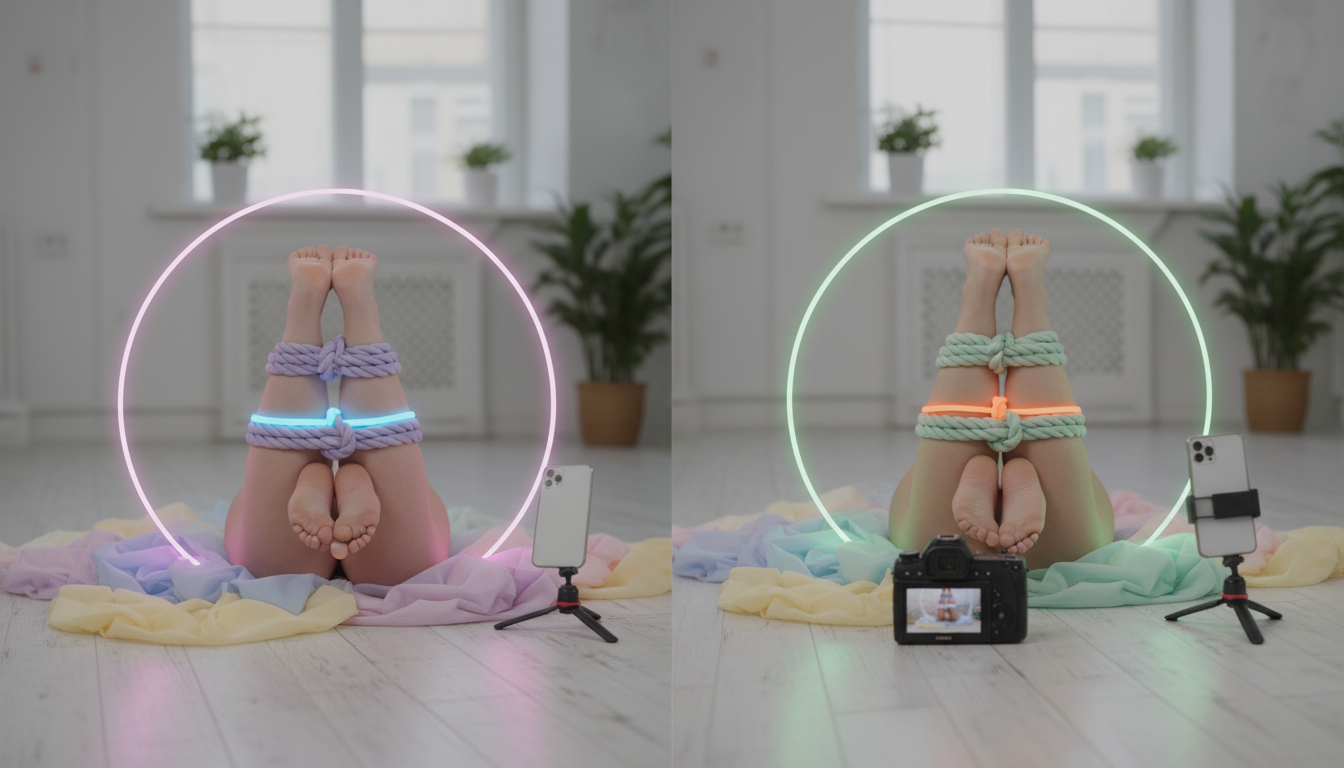
Frogtie vs. Hogtie: Comparing Two Classic Bondage Ties
Frogtie vs. Hogtie: Comparing Two Classic Bondage Ties
Bondage enthusiasts and models frequently encounter the frogtie and hogtie as foundational techniques in rope bondage and restraint work. This comprehensive guide compares these two classic bondage ties, examining their mechanics, applications, safety considerations, and suitability for different scenarios. Whether you're a beginner exploring bondage modeling or an experienced practitioner refining your technique, understanding the distinctions between hogtie vs frogtie configurations will enhance your skill set and help you choose the appropriate tie for your artistic or intimate needs.
Prerequisites for Practicing These Ties
Before attempting either the frogtie tie or hogtie, ensure you have:
- High-quality bondage rope (typically 6-8mm jute or hemp, 25-30 feet per leg for frogtie)
- Safety scissors or EMT shears within immediate reach
- Clear communication protocols established with your partner
- Basic knowledge of circulation checks and nerve locations
- A comfortable surface with adequate padding
- At least 30-45 minutes of uninterrupted time
- Consent and negotiated boundaries clearly discussed
Understanding the Frogtie: Mechanics and Applications
The frogtie tie involves binding each leg individually by folding it so the ankle meets the thigh, creating a compact "frog-like" position. The rope secures the ankle to the upper thigh, preventing the leg from extending while maintaining relative comfort and circulation.
Key Characteristics of the Frogtie
The frogtie offers several distinctive features that make it popular in both artistic bondage photography and intimate scenes:
- Legs remain separated, allowing for various body positions
- Maintains better circulation than many other leg ties
- Permits the bound person to roll, sit, or lie in multiple positions
- Creates aesthetic lines appreciated in bondage photography
- Allows access while maintaining significant restriction
- Can be combined with upper body ties for full-body restraint
Step-by-Step Frogtie Application
- Have your partner lie comfortably on their back or side with legs relaxed
- Fold one leg so the heel touches or approaches the buttock
- Place the center of your rope behind the ankle
- Wrap both ends around the ankle and upper thigh together, creating 2-3 cinching wraps
- Add a cinch between the ankle and thigh to tighten and distribute pressure
- Secure with a knot that can be quickly released if needed
- Check for adequate circulation by pressing the foot and watching for color return within 2 seconds
- Repeat the process on the other leg
- Perform circulation checks every 5-10 minutes during the scene
Understanding the Hogtie: Structure and Uses
The hogtie represents one of the most recognizable bondage positions, connecting the wrists and ankles behind the back while the person lies face-down. This creates significant restriction and vulnerability, making it popular in both BDSM scenes and bondage modeling photography.
Distinctive Features of the Hogtie
The hogtie creates a dramatically different experience compared to the frogtie:
- Requires the bound person to remain in a prone (face-down) position
- Creates intense restriction with limited movement capability
- Produces distinctive stress on shoulders and back flexibility
- Demands shorter duration sessions due to physical demands
- Creates powerful psychological effects of vulnerability and submission
- Requires more careful monitoring for safety concerns
Comprehensive Comparison: Frogtie vs. Hogtie
| Aspect | Frogtie | Hogtie |
|---|---|---|
| Position Flexibility | Multiple positions possible (back, side, sitting) | Primarily face-down only |
| Circulation Safety | Generally better, easier to monitor | Requires more vigilant monitoring |
| Duration Tolerance | 30-60+ minutes possible | Typically 15-30 minutes maximum |
| Difficulty Level | Beginner to intermediate | Intermediate to advanced |
| Physical Demand | Low to moderate | Moderate to high |
| Mobility Restriction | Moderate (can roll, shift) | High (minimal movement) |
| Photography Appeal | Versatile angles, aesthetic lines | Dramatic, classic bondage imagery |
| Psychological Impact | Moderate restraint feeling | Intense vulnerability and helplessness |
| Breathing Concerns | Minimal | Requires attention to chest compression |
| Escape Difficulty | Low to moderate | High |
Safety Considerations and Best Practices
Frogtie Safety Protocols
When executing a frogtie tie, monitor these specific concerns:
- Check behind the knee for pressure on the popliteal artery
- Ensure rope doesn't compress the peroneal nerve along the outer lower leg
- Watch for foot color changes indicating circulation issues
- Allow the bound person to shift positions as needed for comfort
- Use wider wraps to distribute pressure across larger surface areas
Hogtie Safety Requirements
The hogtie demands additional precautions due to its restrictive nature:
- Never leave a hogtied person unattended under any circumstances
- Monitor breathing continuously—shallow breathing indicates excessive chest compression
- Limit sessions to 15-20 minutes initially, extending only with experience
- Keep safety scissors immediately accessible in your hand or pocket
- Position the person's head to the side to maintain open airways
- Be prepared to release immediately if the person signals distress
- Consider using a "strapless" hogtie (wrists and ankles bound separately, then connected) for easier emergency release
Choosing the Right Tie for Your Scenario
Selecting between hogtie vs frogtie depends on multiple factors:
Choose a Frogtie When:
- Working with less experienced partners or practitioners
- Planning extended bondage sessions
- Wanting to incorporate other activities during restraint
- Prioritizing comfort and circulation safety
- Seeking versatile positioning for photography
- The bound person has flexibility limitations
Choose a Hogtie When:
- Both parties are experienced with bondage practices
- Seeking intense psychological impact and vulnerability
- Planning shorter, more intense scenes
- Creating classic bondage photography
- The bound person has good back and shoulder flexibility
- Both parties understand and accept the higher risk profile
Common Challenges and Troubleshooting
Challenge: Rope slipping in frogtie Solution: Use rope with more texture (jute over nylon), create proper cinches between ankle and thigh, and ensure adequate initial tension without over-tightening.
Challenge: Numbness or tingling during either tie Solution: Release immediately and check for nerve compression points. Redistribute rope placement away from nerve pathways, use wider wraps, and reduce overall tightness.
Challenge: Discomfort in hogtie after just a few minutes Solution: This is normal—the hogtie is demanding. Don't force extended duration. Consider a modified hogtie with less extreme arch, or switch to a frogtie for longer sessions.
Challenge: Difficulty achieving hogtie position Solution: Assess flexibility realistically. Not everyone can safely achieve a full hogtie. Use a longer connecting rope to reduce the arch requirement, or choose alternative ties better suited to the person's flexibility.
Combining Techniques for Advanced Bondage
Experienced practitioners often combine elements of both ties. A popular variation involves applying frogties to both legs, then connecting them behind the back with a chest harness—creating a "frogtie hogtie" hybrid that offers some benefits of both positions while managing risk more effectively than a traditional hogtie.
Frequently Asked Questions
Q: Which tie is safer for beginners—frogtie or hogtie?
A: The frogtie is significantly safer for beginners. It provides better circulation, allows position changes, poses fewer breathing risks, and permits longer duration with less physical demand. Master the frogtie thoroughly before attempting a hogtie, and never attempt a hogtie without proper education and practice with simpler ties first.
Q: Can you sleep in a frogtie?
A: While a frogtie is far safer than most bondage positions, sleeping in any bondage is dangerous and not recommended. Circulation issues can develop without the person waking, and the inability to shift positions naturally during sleep creates serious risks. Always release bondage before sleeping.
Q: How tight should the rope be in a frogtie tie?
A: The rope should be snug enough to prevent slipping but loose enough that you can slip one finger between the rope and skin. You should be able to perform a circulation check by pressing the foot and seeing color return within 2 seconds. If you see blanching (white spots), rope marks deeper than surface indentations, or the bound person reports numbness, the tie is too tight.
Q: What's the maximum safe duration for a hogtie?
A: For most people, 15-20 minutes represents a reasonable maximum for a hogtie, even with experience. Some very flexible, experienced individuals may extend to 30 minutes with careful monitoring, but this should never be attempted without extensive prior experience with shorter durations. Physical demand, not just circulation, limits hogtie duration.
Q: Can you do a frogtie or hogtie with rope alternatives?
A: Yes, both ties can be executed with leather cuffs, bondage tape, or specialized restraints designed for these positions. However, rope offers the most customizable fit and is traditional for these classic ties. If using alternatives, ensure they distribute pressure adequately and don't create focused compression points that rope wraps would normally spread across a larger area.
Conclusion and Next Steps
Both the frogtie and hogtie serve important roles in bondage practice, modeling, and artistic expression. The frogtie offers versatility, safety, and comfort for extended sessions and less experienced practitioners. The hogtie provides intense restriction and psychological impact for experienced partners seeking shorter, more demanding scenes.
Begin your practice with the frogtie, mastering circulation checks, rope handling, and communication before progressing to more advanced ties. Take professional workshops when possible, practice on yourself first to understand the sensations, and always prioritize consent and safety over aesthetic or intensity goals. As you develop proficiency with these fundamental techniques, you'll build the foundation for more complex bondage work while maintaining the ethical standards essential to responsible bondage practice.