
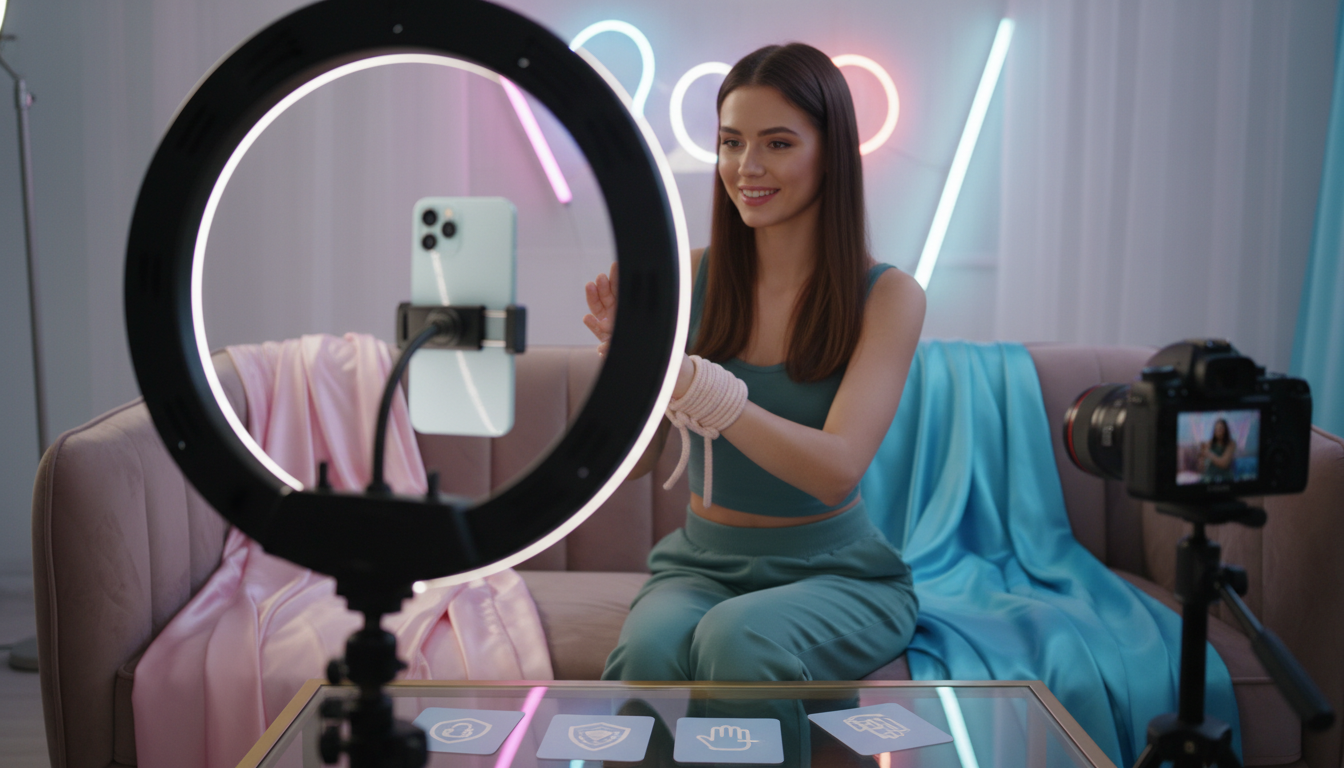
Bondage Safety Guidelines: Essential Knowledge for Models
Bondage Safety Guidelines: Essential Knowledge for Models
Bondage modeling combines artistic expression with physical restraint, creating visually striking imagery that requires comprehensive safety knowledge. This guide provides essential bondage safety guidelines for models entering this specialized field, whether you're working with rope bondage, metal restraints, or other materials. Understanding bondage safety precautions protects your physical wellbeing, ensures professional experiences, and establishes boundaries that honor consent. From beginners exploring their first photoshoot to experienced models expanding their repertoire, these safe bondage practices form the foundation of every successful session.
Prerequisites for Bondage Modeling
Before engaging in bondage modeling work, ensure you meet these fundamental requirements:
- Legal age verification (18+ with valid government identification)
- Basic understanding of consent principles and communication
- Physical health assessment confirming no conditions contraindicated for restraint
- Emergency contact information prepared and accessible
- Research into the photographer, rigger, or studio's reputation and portfolio
Core Bondage Safety Principles
Understanding Risk Levels and Materials
Different bondage materials present varying safety considerations. Rope bondage safety requires particular attention due to nerve compression risks, while metal restraints demand awareness of circulation issues. Understanding these distinctions helps you make informed decisions about which bondage safety tips apply to your specific situation.
Material Safety Comparison:
| Material | Risk Level | Primary Concerns | Release Time | Best For Beginners |
|---|---|---|---|---|
| Soft cotton rope | Low-Medium | Nerve compression, friction | 30-90 seconds | Yes |
| Hemp/jute rope | Medium | Skin abrasion, allergies | 45-120 seconds | Moderate |
| Synthetic rope | Low | Heat generation, slipping | 20-60 seconds | Yes |
| Metal cuffs | Low-Medium | Circulation, joint stress | 5-15 seconds | Yes |
| Leather restraints | Low | Allergic reactions | 10-30 seconds | Yes |
| Chain | Medium | Weight strain, pinching | 15-45 seconds | No |
The Five Essential Safety Rules
These bondage safety precautions must be followed without exception:
-
Never allow bondage around the neck - Any pressure on the neck creates life-threatening risks including asphyxiation, stroke, and cardiac arrest. This rule has no exceptions.
-
Establish and respect safe words/signals - Choose a verbal safe word (commonly "red" for stop, "yellow" for slow down) and a non-verbal signal (such as dropping a held object or specific hand gesture) for situations where speech is restricted.
-
Maintain constant communication - The rigger or photographer must check in regularly, asking about comfort, sensation, and wellbeing. Models should report any numbness, tingling, pain, or discomfort immediately.
-
Keep safety scissors accessible - EMT shears or safety scissors capable of cutting through rope or fabric must be within arm's reach at all times. Never begin a session without them.
-
Limit suspension time and monitor circulation - For suspended bondage, limit initial sessions to 5-10 minutes maximum. Check extremities for color changes, temperature, or loss of sensation every 2-3 minutes.
Pre-Session Safety Checklist
Before any bondage modeling session begins, complete this comprehensive checklist:
- Confirm the rigger's training, experience level, and references
- Review and sign consent forms specifying exactly what will occur
- Disclose any medical conditions, injuries, or physical limitations
- Verify emergency procedures and nearby medical facilities
- Ensure a safety monitor or third party is present
- Inspect all equipment for wear, damage, or defects
- Establish communication protocols and practice safe words
- Remove jewelry that could catch or create pressure points
- Hydrate adequately and avoid alcohol or drugs
- Plan appropriate clothing for quick removal if necessary
Recognizing and Responding to Warning Signs
Physical Warning Indicators
Safe bondage practices require vigilant monitoring for these danger signs:
- Numbness or tingling - Indicates nerve compression; requires immediate position adjustment
- Color changes - Pale, blue, or purple skin signals circulation problems
- Temperature differences - Cold extremities suggest blood flow restriction
- Shooting pain - Sharp, radiating pain indicates nerve impingement
- Loss of grip strength - Inability to squeeze or hold objects
- Dizziness or lightheadedness - May indicate blood pressure changes or breathing restriction
Emergency Response Protocol
Immediate Action Steps:
- Call the safe word or give the safe signal
- Rigger begins controlled, rapid release starting from most restrictive points
- Model remains as still as possible to facilitate quick release
- Once released, slowly move and stretch affected areas
- Monitor for continued symptoms for 15-30 minutes
- Seek medical attention if numbness, pain, or weakness persists
- Document the incident including what occurred and recovery timeline
Position-Specific Safety Guidelines
Floor and Kneeling Positions
These bondage safety tips apply to ground-based restraint:
- Pad hard surfaces under knees, elbows, and contact points
- Avoid positions requiring sustained weight on joints beyond 10-15 minutes
- Monitor hip and shoulder flexibility limits
- Keep airways clear and face accessible
- Ensure ability to shift weight periodically
Suspension Bondage Safety
Suspension represents the highest risk category and requires advanced knowledge:
- Only work with certified suspension riggers with documented training
- Begin with partial suspensions before attempting full body suspension
- Use dynamic loading - test rope strength before transferring full body weight
- Limit first suspensions to 5 minutes maximum
- Position crash mats or padding beneath suspension points
- Have multiple people present for suspension sessions
- Never suspend alone or with only the photographer present
Communication and Consent Framework
Pre-Session Negotiation
Thorough negotiation distinguishes professional bondage safety from dangerous situations:
- Discuss specific ties, positions, and duration planned
- Identify hard limits (absolute nos) and soft limits (maybes with conditions)
- Clarify photography usage rights and distribution
- Establish comfort checking frequency
- Review aftercare plans and recovery time
- Confirm who else will be present during the session
During-Session Communication
Maintaining dialogue ensures ongoing consent:
- Respond honestly to comfort checks - never minimize discomfort
- Request adjustments before problems become serious
- Communicate emotional state as well as physical sensations
- Don't rush through warning signs to "get the shot"
- Remember that consent can be withdrawn at any moment
Aftercare and Recovery
Proper aftercare prevents complications and promotes wellbeing:
- Allow 10-15 minutes for gentle movement and stretching
- Hydrate and consume light snacks to restore blood sugar
- Apply moisturizer to areas with rope marks
- Monitor for delayed nerve symptoms over next 24-48 hours
- Avoid intense physical activity for several hours post-session
- Document any marks, soreness, or concerns with photos if needed
- Maintain communication with rigger about recovery experience
Common Challenges and Solutions
Challenge: Nervousness causes shallow breathing and dizziness Solution: Practice deep breathing exercises before the session. Request frequent breaks. Start with minimal restraint and gradually increase.
Challenge: Rope marks persist longer than expected Solution: Apply arnica gel or vitamin K cream. Stay hydrated. Avoid sun exposure on marks. Allow more recovery time between sessions.
Challenge: Difficulty communicating discomfort due to subspace or scene intensity Solution: Establish check-in questions requiring specific responses ("What number from 1-10?"). Use the traffic light system. Have a dedicated safety monitor.
Challenge: Pressure to continue when uncomfortable Solution: Remember your safe word is absolute. Professional riggers respect boundaries. Document concerns and reconsider working with anyone who pressures you.
Building Your Safety Knowledge
Continuous education strengthens your bondage safety foundation:
- Attend rope bondage workshops focusing on safety and self-ties
- Study anatomy, particularly nerve pathways and circulation
- Join modeling communities to learn from experienced practitioners
- Request to observe sessions before participating
- Maintain a safety log documenting each session and any issues
- Stay current on evolving best practices and research
FAQ: Bondage Safety Guidelines for Models
Q: How long can I safely remain in bondage during a photoshoot?
A: Duration depends on position complexity and restriction severity. Simple wrist or ankle ties may be safe for 20-30 minutes with circulation checks. Complex rope bondage should typically be limited to 15-20 minutes maximum. Suspensions should start at 5-10 minutes for beginners. Always prioritize sensation over completing shots - if you feel numbness, tingling, or discomfort, communicate immediately regardless of time elapsed. Professional photographers understand safety limitations and work within them.
Q: What should I do if I feel uncomfortable with a rigger's techniques but haven't experienced physical pain yet?
A: Trust your instincts immediately. Discomfort encompasses emotional and intuitive feelings, not just physical pain. Use your safe word or signal to pause the session. You can request specific changes, ask questions about techniques, or end the session entirely. You never need to justify feeling uncomfortable. Reputable riggers welcome questions and respect hesitation. If someone responds poorly to your concerns, that's a red flag - document the experience and don't work with them again.
Q: Are there medical conditions that make bondage modeling unsafe?
A: Several conditions require extra caution or contraindicate bondage entirely. These include nerve disorders (neuropathy, carpal tunnel syndrome), circulation problems, joint hypermobility or instability, recent injuries or surgeries, pregnancy, heart conditions, and respiratory issues. Some medications like blood thinners increase bruising risk. Always disclose medical history to your rigger before sessions. Consult your physician if uncertain whether bondage is safe for your specific situation. Many conditions allow modified bondage with appropriate precautions.
Q: How do I verify that a rigger or photographer is safe to work with?
A: Research thoroughly before committing. Request references from other models they've worked with and contact them privately. Review their portfolio for technique quality and model comfort indicators. Check their reputation in bondage modeling communities and forums. Verify any claimed certifications or training. Meet in public first to discuss safety protocols, boundaries, and expectations. Trust your intuition - if someone rushes you, avoids safety questions, or lacks verifiable experience, decline the opportunity. Professional practitioners welcome verification and prioritize your comfort.
Q: What's the difference between rope burn and dangerous nerve damage?
A: Rope burn presents as surface-level skin irritation with redness, warmth, and stinging sensation that affects the outer skin layers. It's uncomfortable but typically resolves with moisturizer and healing time. Nerve damage causes numbness, tingling ("pins and needles"), shooting pain, weakness, or loss of sensation extending beyond the contact area. Nerve symptoms may appear during bondage or hours afterward. Mild nerve compression resolves within minutes to hours after release. Symptoms persisting beyond 24-48 hours require medical evaluation. Prevention through proper technique and immediate response to warning signs protects against serious nerve injury.
Conclusion: Prioritizing Safety in Bondage Modeling
Bondage safety guidelines form the non-negotiable foundation of professional modeling work. By understanding rope bondage safety principles, recognizing warning signs, maintaining clear communication, and working only with trained practitioners, you protect your health while creating powerful artistic imagery. Remember that professional riggers and photographers respect boundaries, welcome questions, and prioritize your wellbeing over any photograph.
Next Steps:
- Complete first aid and CPR certification
- Attend a beginner bondage safety workshop in your area
- Connect with experienced models for mentorship
- Create a personal safety protocol checklist
- Practice self-advocacy and boundary communication
- Start with simple restraint before progressing to complex bondage
Your safety is paramount. Never compromise it for any opportunity, and remember that the right collaborators will always support your boundaries and comfort.