
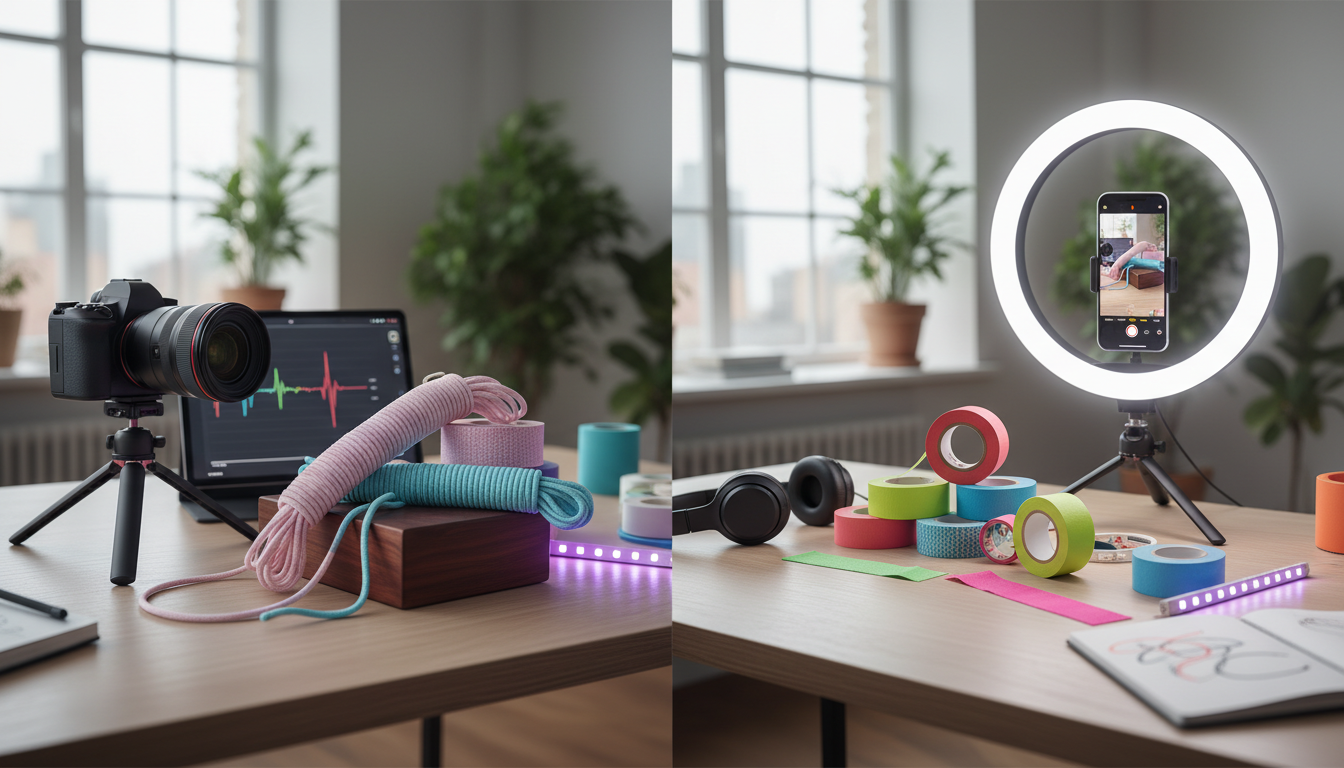
Bondage Rope vs. Tape: Which Is Better?
Bondage Rope vs. Tape: Which Is Better?
When entering the world of bondage modeling and restraint artistry, one of the most fundamental decisions you'll face is choosing between rope and tape as your primary restraint material. This comprehensive guide examines bondage tape vs rope, comparing their characteristics, applications, safety considerations, and suitability for different scenarios. Whether you're a beginner exploring bondage materials or an experienced practitioner refining your toolkit, understanding the distinctions between rope vs tape bondage will help you make informed decisions that prioritize safety, aesthetics, and effectiveness.
Prerequisites
Before exploring different bondage materials, ensure you have:
- A clear understanding of consent and communication protocols
- Basic knowledge of circulation safety and nerve placement
- Safety scissors or EMT shears readily available
- A trusted partner or professional supervisor for practice sessions
- Familiarity with safe words and non-verbal signals
Understanding Bondage Rope
Bondage rope remains the most traditional and versatile restraint material in both artistic and practical applications. Rope bondage, particularly Japanese Shibari and Kinbaku styles, has evolved into a recognized art form celebrated in galleries and performances worldwide.
Types of Bondage Rope
Different rope materials offer distinct characteristics:
- Natural fibers (jute, hemp, cotton): Provide excellent grip, traditional aesthetics, and tactile feedback
- Synthetic fibers (nylon, MFP): Offer durability, easy maintenance, and hypoallergenic properties
- Silk rope: Delivers luxury aesthetics with minimal texture for sensitive skin
Advantages of Rope
- Artistic versatility: Enables complex patterns, decorative knots, and full-body harnesses
- Adjustable tension: Allows precise control over tightness and pressure distribution
- Durability: High-quality rope lasts years with proper maintenance
- Tactile experience: Natural fibers provide sensory stimulation through texture
- Cultural heritage: Connects practitioners to centuries of bondage tradition
Understanding Bondage Tape
Bondage tape, also known as self-adhering restraint tape, represents a modern innovation in bondage materials. Unlike traditional adhesive tape, bondage tape only sticks to itself, making it skin-safe and hair-friendly.
Characteristics of Bondage Tape
Bondage tape typically comes in rolls ranging from 2 to 3 inches wide and offers:
- Non-adhesive properties that won't stick to skin or hair
- Lightweight, stretchy material (usually PVC or similar polymer)
- Available in multiple colors for aesthetic variety
- Single-use or limited-reuse application
- Quick application and removal process
Advantages of Tape
- Speed of application: Wrap and secure in seconds without knot-tying skills
- Hair-safe: No risk of tangling or pulling hair during removal
- Quiet application: Ideal for photo shoots and film productions
- No learning curve: Beginners can achieve effective restraint immediately
- Travel-friendly: Compact and lightweight for location work
Comprehensive Comparison: Rope vs. Tape
| Feature | Bondage Rope | Bondage Tape |
|---|---|---|
| Learning Curve | Steep; requires practice and training | Minimal; intuitive for beginners |
| Application Time | 10-45+ minutes depending on complexity | 2-5 minutes for basic restraints |
| Reusability | Hundreds of uses with maintenance | 1-3 uses before losing adhesion |
| Cost per Use | $0.10-0.50 (amortized) | $2-5 per session |
| Aesthetic Appeal | High; intricate patterns possible | Moderate; clean but simple |
| Adjustment Capability | Excellent; retie or adjust tension | Limited; must unwrap and reapply |
| Safety Release | Requires cutting in emergencies | Tears easily for quick removal |
| Skin Sensitivity | Varies by material; can cause friction | Generally gentle; minimal friction |
| Noise Level | Silent during use | Slight rustling during application |
| Storage Requirements | Moderate space; proper coiling needed | Minimal; compact rolls |
Choosing the Right Material for Different Scenarios
Best Uses for Rope
Rope excels in situations requiring:
- Artistic photography and performances: Complex patterns create stunning visual compositions
- Extended sessions: Rope remains comfortable and secure over longer periods
- Suspension work: Properly rated rope is essential for any weight-bearing bondage
- Traditional practice: Studying classical Shibari or Western rope bondage techniques
- Budget-conscious practitioners: Initial investment provides long-term value
Best Uses for Tape
Bondage tape is ideal for:
- Beginners exploring restraint: Low barrier to entry without skill requirements
- Quick fashion shoots: Rapid application maintains workflow efficiency
- Sensitive skin concerns: Minimal friction and no fiber particles
- Travel and location work: Lightweight kit without bulky rope bags
- Temporary restraint needs: Short sessions or experimentation
Safety Considerations for Both Materials
Regardless of whether you choose rope or tape, prioritize these safety protocols:
- Circulation checks: Monitor color, temperature, and sensation in restrained areas every 5-10 minutes
- Avoid joints and nerve pathways: Never place direct pressure on elbows, knees, wrists, or neck
- Communication: Establish and honor safe words and check-ins throughout the session
- Emergency release tools: Keep safety scissors accessible and visible at all times
- Time limits: Begin with short sessions (15-20 minutes) and gradually extend as comfort increases
Common Challenges and Solutions
Rope Challenges
Challenge: Rope burns or friction marks Solution: Use softer rope materials, increase rope diameter (6-8mm), apply lotion beforehand, or place fabric barriers at friction points
Challenge: Knots tightening unexpectedly Solution: Learn proper tension management, use double-column ties instead of single-column, practice quick-release knots
Challenge: Rope maintenance requirements Solution: Establish a cleaning routine, store rope properly coiled, condition natural fibers monthly
Tape Challenges
Challenge: Tape losing adhesion prematurely Solution: Avoid applying over lotions or oils, overlap wraps by 50%, store in cool, dry conditions
Challenge: Difficulty achieving complex positions Solution: Combine tape with rope for structural elements, use wider tape for better coverage, apply multiple layers strategically
Challenge: Cost accumulation over time Solution: Reserve tape for specific scenarios, buy in bulk for better pricing, alternate with reusable materials
Equipment Checklist
For Rope Bondage
- 4-6 lengths of rope (25-30 feet each for beginners)
- Safety scissors or EMT shears
- Rope bag or storage solution
- Conditioning oil or rope treatment (for natural fibers)
- Educational resources (books, videos, or workshops)
For Tape Bondage
- 2-4 rolls of bondage tape in preferred colors
- Safety scissors
- Storage container to prevent dust accumulation
- Backup rolls for extended sessions
- Skin-safe wipes for cleanup
Making Your Decision
The bondage tape vs rope debate doesn't require an either-or answer. Many experienced practitioners maintain both materials in their toolkit, selecting based on specific session requirements. Consider these factors:
Choose rope if you:
- Want to develop technical skills and artistic expression
- Plan regular practice and long-term engagement
- Appreciate traditional aesthetics and cultural connections
- Need weight-bearing restraints or complex body positioning
- Prefer sustainable, reusable materials
Choose tape if you:
- Need immediate results without extensive training
- Work in professional modeling or production environments
- Have hair length or skin sensitivity concerns
- Require portable, travel-friendly restraint options
- Focus on quick fashion or glamour applications
Consider both if you:
- Work as a professional bondage model across various contexts
- Want maximum versatility for different creative projects
- Teach or demonstrate bondage techniques to diverse audiences
- Enjoy experimenting with hybrid approaches and combinations
Frequently Asked Questions
Q: Is bondage tape as secure as rope for restraint?
A: Bondage tape provides adequate security for non-weight-bearing restraints when applied with sufficient layers (typically 3-5 wraps). However, it cannot match rope's structural integrity for suspension work or positions requiring significant load-bearing capacity. For serious restraint applications, rope remains the superior choice, while tape excels in lighter, fashion-oriented, or beginners scenarios.
Q: Can I reuse bondage tape, and how does its cost compare to rope long-term?
A: Bondage tape can sometimes be reused 1-3 times if carefully removed and stored, but its self-adhesive properties degrade quickly. A single roll ($8-15) typically provides 2-3 sessions. In contrast, quality bondage rope ($20-40 per length) can last hundreds of sessions with proper care, making rope significantly more economical for regular practitioners. Calculate your expected usage frequency to determine which material offers better value for your specific needs.
Q: Which material is safer for beginners learning bondage?
A: Both materials are safe when used properly, but they present different risk profiles. Bondage tape offers faster emergency release (simply tear it), minimal friction risk, and no complex knots that could tighten unexpectedly. However, rope bondage taught through proper instruction provides better understanding of anatomy, circulation safety, and tension control—knowledge that applies across all bondage materials. Beginners should start with either material under supervision or through reputable educational resources, always prioritizing communication and safety scissors accessibility.
Q: Can rope and tape be combined in the same bondage session?
A: Absolutely! Many experienced practitioners use hybrid approaches, employing rope for structural harnesses and foundational ties while adding tape for decorative elements, additional security, or covering sensitive areas. For example, a rope chest harness might be enhanced with tape wrapping around the wrists for a sleek photographic appearance. This combination leverages each material's strengths—rope's structural integrity and tape's aesthetic simplicity—creating versatile and visually striking results.
Q: How do I maintain and store rope versus tape to maximize longevity?
A: Rope maintenance requires regular attention: natural fibers need periodic conditioning with jute oil or rope wax, proper drying after use, and storage in coiled bundles away from direct sunlight and moisture. Synthetic rope needs less maintenance but benefits from occasional washing with mild detergent. Bondage tape requires minimal care—simply store rolls in their original packaging or sealed containers in cool, dry conditions away from dust. Avoid storing tape in extremely hot environments, as heat can compromise the self-adhesive coating. Properly maintained rope lasts years, while tape typically remains effective for 6-12 months from purchase.
Conclusion
The bondage rope vs. tape decision ultimately depends on your specific goals, experience level, and intended applications. Rope offers unmatched versatility, artistic potential, and long-term value for serious practitioners and those pursuing bondage as an art form. Bondage tape provides accessibility, convenience, and speed for beginners, professional models, and situations requiring quick application.
Rather than viewing these bondage materials as competitors, consider them complementary tools in a comprehensive restraint toolkit. Start with the material that aligns with your immediate needs and comfort level, then expand your skills and collection as your practice evolves. Invest in quality education, prioritize safety and consent in every session, and remember that the best bondage material is the one used with knowledge, respect, and care.
For your next steps, consider attending a local bondage workshop to practice with both materials under expert supervision, or explore our comprehensive guides on rope care, tying techniques, and building a professional bondage modeling portfolio.