
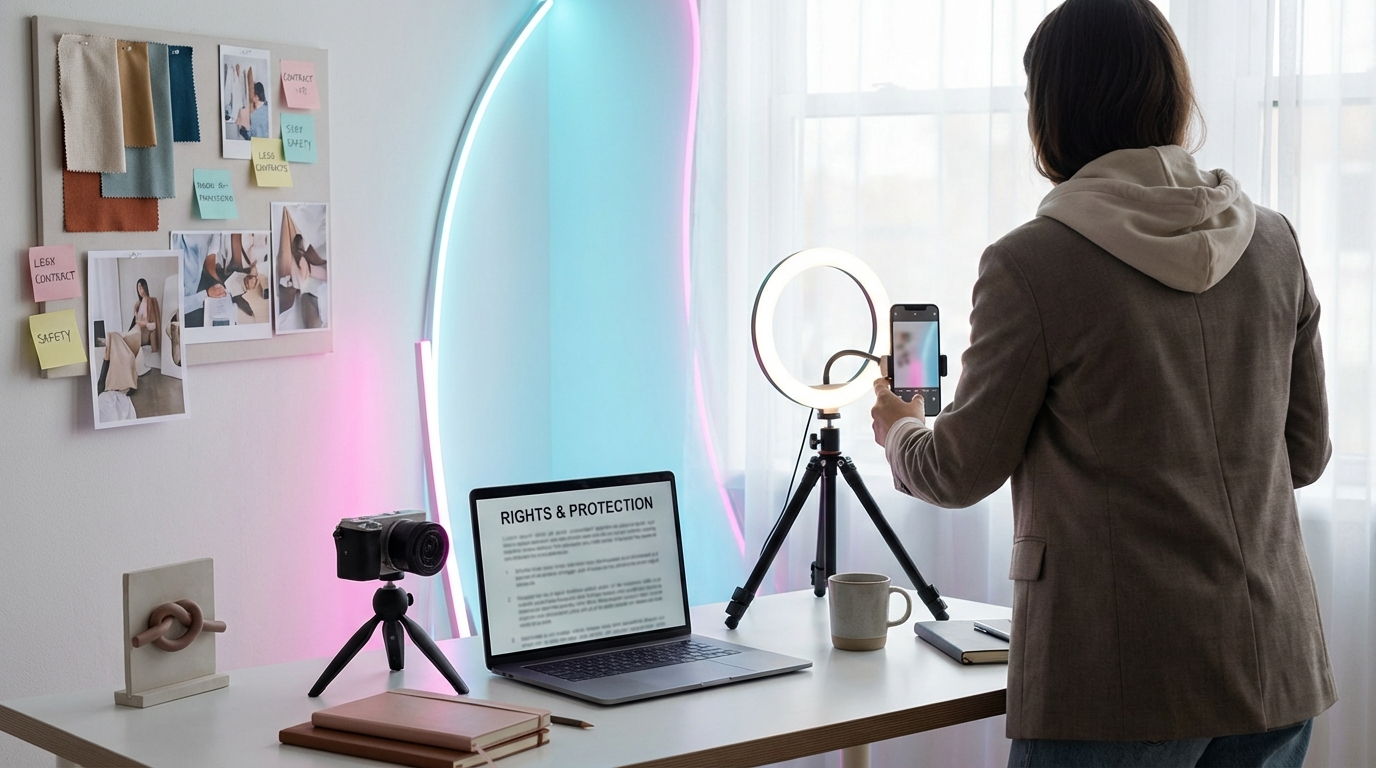
Legal Rights for Bondage Models: Know Your Protection
Legal Rights for Bondage Models: Know Your Protection
Bondage modeling is a legitimate profession that requires understanding your legal rights and protections. Whether you're a new model entering the industry or an experienced professional reviewing your contracts, knowing your legal standing is essential for protecting your career, your image rights, and your personal safety. This comprehensive guide covers the fundamental legal protections available to bondage models, including contract rights, intellectual property considerations, workplace safety laws, and strategies for enforcing your rights. By understanding model agreements and legal protection mechanisms, you can confidently navigate the industry while safeguarding your interests and building a sustainable career.
Prerequisites for Understanding Your Legal Rights
Before diving into specific legal protections, bondage models should:
- Be of legal age in their jurisdiction (18+ in most locations, 21+ in some)
- Understand the difference between independent contractor and employee status
- Have access to legal counsel or model advocacy organizations
- Maintain organized records of all contracts, correspondence, and work agreements
- Research industry standards and professional organizations in their area
Understanding Model Agreements and Contracts
Every bondage model should work under written model agreements that clearly define the relationship between model and photographer, producer, or client. Contract rights form the foundation of your legal protection in this industry.
Essential Elements of a Model Release
A proper model release or contract should include:
- Identification of all parties - Full legal names and contact information for the model and hiring party
- Scope of work definition - Specific description of the shoot, including bondage styles, poses, and any limitations
- Usage rights specification - Where and how images can be used (commercial, editorial, web, print, duration)
- Compensation terms - Payment amount, method, and schedule clearly stated
- Image rights ownership - Who owns the copyright and what rights the model retains
- Duration and territory - Geographic areas and time periods where content may be used
- Model approval clauses - Right to review and approve images before publication
- Termination conditions - How either party can end the agreement
Key Contract Rights to Negotiate
When reviewing contracts, bondage models should pay special attention to these negotiable elements:
- Attribution rights: Whether your name or modeling alias will be credited
- Exclusivity clauses: Restrictions on working with competitors or in similar content
- Revision rights: Your ability to revoke consent for certain images under specific circumstances
- Compensation escalation: Additional payments if images are used beyond original scope
- Safety protocols: Required safety measures, safe words, and immediate termination rights
Comparison of Model Working Arrangements
| Arrangement Type | Contract Control | Payment Structure | Image Rights | Legal Protection Level |
|---|---|---|---|---|
| Direct Client Hire | High | Negotiable per shoot | Typically retained by model | Moderate - depends on contract |
| Agency Representation | Medium | Commission-based (10-30%) | Shared or agency-managed | High - agency provides legal support |
| Studio Employment | Low | Hourly/salary | Usually transferred to studio | High - employment law protections |
| Independent Contractor | Highest | Project-based | Fully negotiable | Variable - self-managed |
| Content Platform (subscription) | Medium | Revenue share | Platform owns distribution rights | Moderate - platform terms apply |
Intellectual Property and Image Rights
Image rights represent one of the most valuable assets for bondage models. Understanding intellectual property law helps protect your likeness and professional reputation.
Copyright Ownership
In most jurisdictions, copyright belongs to the photographer or producer who created the images. However, models have several important rights:
- Right of publicity: Control over commercial use of your name, image, and likeness
- Privacy rights: Protection against unauthorized publication in certain contexts
- Trademark potential: Ability to trademark your stage name or persona
- Moral rights: In some countries, right to object to derogatory treatment of images
Protecting Your Image Rights
Models can strengthen legal protection for their image rights by:
- Registering professional names as trademarks
- Including specific usage limitations in every contract
- Maintaining a portfolio of authorized images to prove unauthorized use
- Using watermarks on self-promotional materials
- Documenting all shoots with your own records and metadata
Workplace Safety and Legal Protections
Bondage modeling involves physical restraint and vulnerability, making legal protection for workplace safety critically important.
Legal Safety Requirements
Depending on your jurisdiction and working arrangement, you may be entitled to:
- Safe working conditions free from hazardous equipment or practices
- Presence of a safety monitor or chaperone during shoots
- Immediate access to release mechanisms from restraints
- Breaks, hydration, and temperature-controlled environments
- Freedom from harassment, discrimination, or coercion
- Workers' compensation coverage if classified as an employee
Consent and Boundaries
Your legal right to consent is ongoing and can be withdrawn at any time:
- Establish and communicate hard limits before any shoot begins
- Use safe words or signals that immediately stop all activity
- Document your boundaries in writing as part of the contract
- Report violations to appropriate authorities or professional organizations
- Understand that consent to one activity doesn't imply consent to all activities
Essential Legal Protections for Models
Every bondage model should implement these protective measures:
- Never sign away perpetual unlimited rights without substantial compensation
- Always retain veto power over final image selection when possible
- Document everything including contracts, communications, and shoot details
- Join professional organizations that offer legal resources and advocacy
- Maintain separate legal entity (LLC or corporation) for tax and liability benefits
- Carry professional liability insurance when working as independent contractor
- Know your jurisdiction's laws regarding adult content, obscenity, and labor rights
- Build relationships with specialized attorneys who understand the industry
Anti-Discrimination and Employment Law
Bondage models working as employees or through agencies receive protection under employment law, including:
- Protection from discrimination based on race, gender, age, or other protected classes
- Right to safe working conditions under OSHA or equivalent regulations
- Protection from sexual harassment or hostile work environments
- Right to organize or join unions in some jurisdictions
- Minimum wage and overtime protections (for employees, not independent contractors)
Common Legal Challenges and Solutions
Challenge: Unauthorized Image Use
Problem: Your images appear on websites or in publications without permission.
Solution: Send DMCA takedown notices to hosting providers, document all unauthorized uses, and consult an intellectual property attorney about potential damages. Watermark personal images and conduct regular reverse image searches.
Challenge: Contract Disputes
Problem: Client refuses to pay or uses images beyond agreed scope.
Solution: Send formal demand letter citing specific contract provisions, escalate to small claims court for amounts under jurisdictional limits, or engage an attorney for larger disputes. Always keep original signed contracts.
Challenge: Safety Violations
Problem: Producer ignores safe words or creates dangerous conditions.
Solution: Immediately stop the shoot, document the violation with photos or video if safe to do, report to relevant authorities (OSHA, police if assault occurred), and contact model advocacy organizations. Your physical safety always takes priority over any contract.
Challenge: Pressure to Sign Unfavorable Contracts
Problem: You're pressured to sign away rights without time to review.
Solution: Never sign under pressure. Take contracts home for review, consult with an attorney or experienced models, and be willing to walk away from exploitative agreements. Legitimate professionals respect your need to review contracts carefully.
Building Your Legal Protection Strategy
Developing a comprehensive approach to legal protection involves:
- Education: Regularly update your knowledge of relevant laws and industry standards
- Documentation: Maintain meticulous records of all professional activities
- Professional relationships: Build connections with attorneys, accountants, and other models
- Financial preparation: Set aside funds for potential legal expenses
- Reputation management: Monitor your online presence and address issues promptly
- Continuous advocacy: Support industry organizations working to improve model protections
Frequently Asked Questions
Q: Can I legally revoke consent after images have been published?
A: This depends on your contract and jurisdiction. Generally, once you've signed a release, revoking consent is difficult unless the contract includes specific revocation clauses or the images are used beyond the agreed scope. Some jurisdictions allow revocation for images of minors or in cases of fraud or duress. Always include termination clauses in contracts that specify circumstances under which you can withdraw consent. If images are used in ways that constitute defamation or violate your right to privacy, you may have legal recourse even with a signed release.
Q: What's the difference between work-for-hire and licensing my image rights?
A: In a work-for-hire arrangement, you typically receive a one-time payment and transfer complete ownership of images to the client, who can use them indefinitely without additional compensation. When licensing image rights, you retain ownership and grant limited usage rights for specific purposes, durations, or territories. Licensing typically allows you to earn ongoing revenue from the same images and maintain more control. Most bondage models should prefer licensing arrangements with clearly defined model agreements rather than complete rights transfers.
Q: Am I protected by employment law if I work as an independent contractor?
A: Independent contractors have fewer legal protections than employees but aren't without rights. You're protected by contract law, intellectual property law, and general civil rights. However, you typically aren't covered by minimum wage laws, overtime requirements, unemployment insurance, or workers' compensation. The classification matters significantly—some clients misclassify employees as contractors to avoid obligations. If you work exclusively for one client, follow their schedule, and use their equipment, you may legally be an employee regardless of what your contract says.
Q: What legal action can I take against unauthorized use of my images?
A: You have several options depending on the situation. First, send a cease-and-desist letter demanding removal and compensation. File DMCA takedown notices with website hosts and search engines. You can pursue civil litigation for copyright infringement (if you own the copyright), violation of right of publicity, or breach of contract. Remedies may include statutory damages, actual damages plus profits from unauthorized use, and attorney's fees. Document everything, including screenshots with dates, and consult an intellectual property attorney to evaluate your strongest claims.
Q: How can I protect myself legally when working internationally?
A: International work adds complexity to legal protection. Research the destination country's laws regarding adult content, labor rights, and model protections before accepting work. Use contracts that specify which jurisdiction's laws apply and where disputes will be resolved. Verify that your travel documents allow you to work legally in that country. Consider purchasing international liability insurance. Work only with reputable agencies or producers with verifiable track records. Keep copies of all contracts and documentation accessible to your emergency contacts. Be aware that age verification requirements and content restrictions vary significantly by country.
Conclusion
Understanding your legal rights as a bondage model is fundamental to building a successful and sustainable career. From negotiating model agreements and protecting your image rights to ensuring workplace safety and addressing contract disputes, legal protection empowers you to work confidently and professionally. Always prioritize written contracts that clearly define usage rights, compensation, and safety protocols. Document everything, educate yourself continuously about relevant laws, and don't hesitate to consult with specialized attorneys when needed.
Take proactive steps today by reviewing your existing contracts, joining professional model organizations, and establishing relationships with legal professionals who understand the industry. Your legal rights are valuable assets—protect them as carefully as you protect your physical safety and professional reputation. As you advance in your career, consider your legal knowledge as important as your modeling skills and always advocate for fair treatment and strong legal protections within the bondage modeling community.