
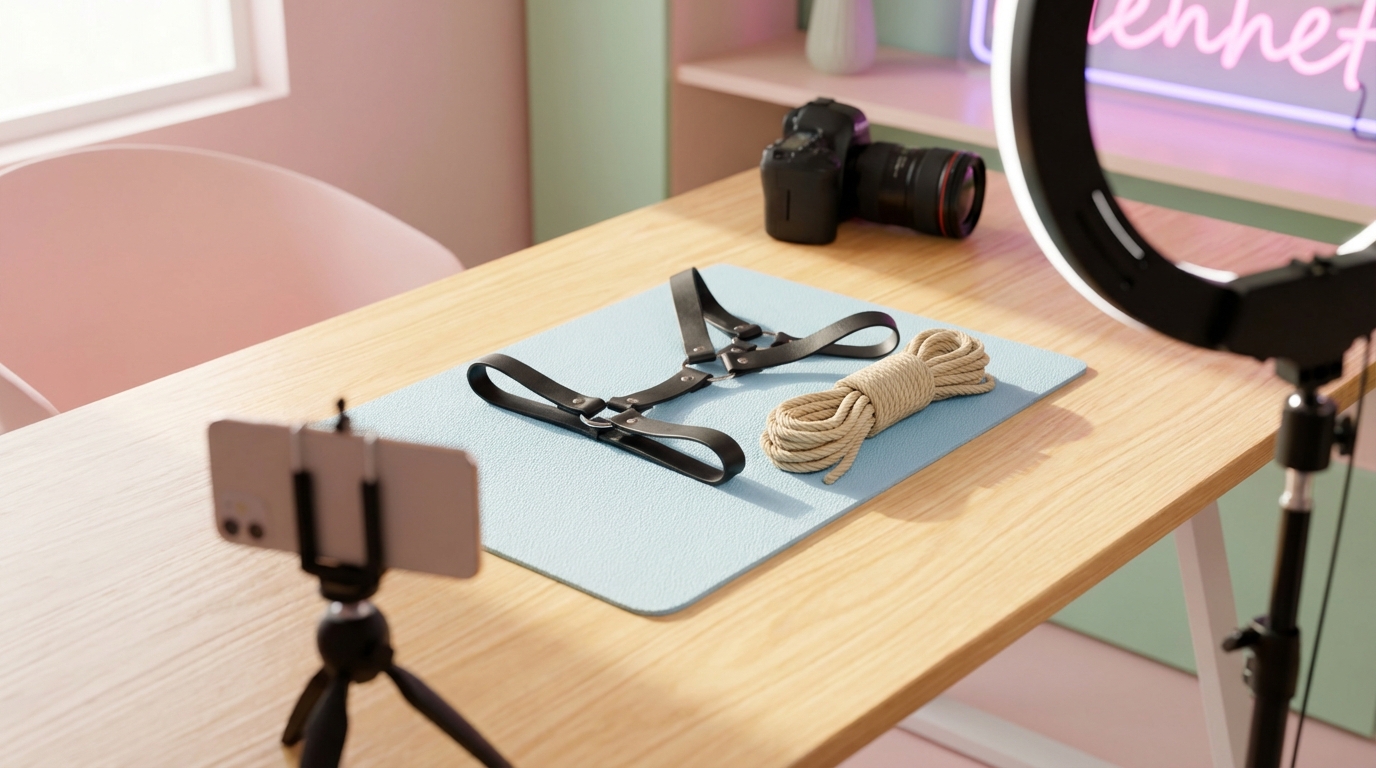
Bondage Harness vs. Rope: Which to Choose?
Bondage Harness vs. Rope: Which to Choose?
Whether you're a bondage model preparing for a photo shoot, a practitioner exploring restraint options, or someone curious about incorporating bondage equipment into artistic work, understanding the differences between harnesses and rope is essential. This comprehensive guide examines both restraint types, helping you make informed bondage harness choices based on your experience level, intended use, aesthetic preferences, and safety considerations. We'll explore the practical distinctions in the rope vs harness debate, covering everything from application techniques to long-term durability.
Understanding the Fundamentals
What Are Bondage Harnesses?
Bondage harnesses are pre-constructed restraint systems typically made from leather, nylon webbing, or synthetic materials. They feature adjustable straps, buckles, and D-rings designed to secure around specific body parts. Harnesses come in various styles including chest harnesses, full-body configurations, and specialty designs for specific poses or suspension work.
What Is Rope Bondage?
Rope bondage involves using specialized rope—commonly jute, hemp, or synthetic materials—to create custom restraints and decorative patterns. This traditional technique, with roots in Japanese Shibari and Kinbaku, allows for infinite customization but requires knowledge of proper knots, tension control, and safety protocols.
Detailed Comparison: Harness vs Rope Bondage
| Feature | Bondage Harness | Rope Bondage |
|---|---|---|
| Setup Time | 2-5 minutes | 10-45 minutes (skill-dependent) |
| Learning Curve | Beginner-friendly | Moderate to advanced |
| Customization | Limited to design | Completely customizable |
| Cost Range | $30-$300+ | $15-$80 for rope set |
| Maintenance | Leather conditioning, washing | Regular inspection, replacement |
| Aesthetic | Modern, industrial, structured | Artistic, traditional, intricate |
| Portability | Bulky but durable | Compact and travel-friendly |
| Safety Release | Quick-release buckles | Requires cutting in emergencies |
When to Choose a Bondage Harness
Harnesses excel in specific scenarios where convenience and consistency matter most. Professional bondage modeling sessions often utilize harnesses for their reliability and photogenic appearance.
Ideal Scenarios for Harnesses:
- Time-sensitive situations: Photo shoots, performances, or sessions with limited setup time
- Beginner practitioners: Those new to restraint work who need reliable, safe options
- Suspension work: Specifically designed suspension harnesses distribute weight safely
- Frequent use: Durable construction withstands repeated application and removal
- Standardized positioning: When consistent placement is required across multiple sessions
Advantages of Harness Systems
- Immediate application: No knot-tying skills required
- Adjustable fit: Accommodates various body types with buckle adjustments
- Predictable security: Pre-tested load capacity for suspension applications
- Professional appearance: Clean lines photograph exceptionally well
- Quick release: Emergency removal via buckles without cutting
When to Choose Rope Bondage
Rope offers unmatched versatility and artistic expression, making it the preferred choice for practitioners who value creativity and traditional techniques. Understanding proper rope bondage harness choices involves recognizing when rope's flexibility outweighs harness convenience.
Ideal Scenarios for Rope:
- Artistic expression: Creating visually complex patterns and designs
- Custom body contouring: Adapting restraints to unique body shapes and proportions
- Traditional practices: Honoring Shibari, Kinbaku, or Western rope bondage traditions
- Budget considerations: Lower initial investment compared to quality harnesses
- Travel requirements: Compact storage for discrete transportation
Advantages of Rope Systems
- Infinite customization: Create any pattern or restraint configuration
- Tactile experience: The rope application process itself becomes part of the experience
- Precise tension control: Adjust tightness exactly where needed
- Cultural significance: Connect with centuries-old bondage traditions
- Minimal storage: Coils compactly for easy storage and transport
Step-by-Step Guide: Making Your Decision
- Assess your experience level: Beginners should start with harnesses or basic rope techniques under guidance
- Define your primary purpose: Determine whether you need restraints for modeling, photography, performance, or personal practice
- Evaluate your time constraints: Consider typical session duration and setup time available
- Set your budget: Calculate initial costs plus ongoing maintenance and replacement expenses
- Consider safety requirements: Identify your comfort level with emergency release procedures
- Test both options: If possible, try supervised sessions with both harnesses and rope before investing
- Research quality sources: Identify reputable manufacturers or rope suppliers for your chosen option
- Invest in education: Take classes, workshops, or work with experienced practitioners before independent use
Essential Features to Evaluate
For Bondage Harnesses:
- Material quality: Full-grain leather, reinforced nylon, or medical-grade synthetics
- Hardware strength: Stainless steel buckles, welded D-rings rated for intended use
- Adjustability range: Sufficient strap length for your body measurements
- Stitching integrity: Reinforced stress points with quality thread
- Quick-release mechanisms: Emergency removal capability without tools
- Weight distribution: Padded contact points for comfort during extended wear
For Rope Bondage:
- Fiber type: Natural fibers (jute, hemp) for grip; synthetic for durability
- Diameter: 6mm for decorative work, 8mm for general restraint, 10mm for suspension
- Length: Standard 25-30 foot lengths for versatility
- Tensile strength: Minimum 500 lbs breaking strength for suspension applications
- Texture: Appropriate grip without excessive roughness
- Treatment: Properly conditioned and broken-in for safe use
Common Challenges and Solutions
Harness Challenges:
Problem: Difficulty achieving proper fit with standard sizes
Solution: Seek custom harness makers who offer made-to-measure options, or choose designs with extensive adjustability
Problem: Material degradation from body oils and sweat
Solution: Implement regular cleaning protocols specific to your harness material; condition leather monthly
Problem: Limited aesthetic variety for specific photographic styles
Solution: Layer harnesses over clothing or combine with rope accents for unique looks
Rope Challenges:
Problem: Nerve compression from improper rope placement
Solution: Study anatomy, avoid high-risk areas, maintain communication, never leave someone unattended
Problem: Time-consuming application process
Solution: Practice fundamental ties until muscle memory develops; start with simpler patterns
Problem: Rope maintenance and replacement costs over time
Solution: Rotate rope sets, inspect regularly, properly store to extend lifespan
Making Bondage Harness Choices for Professional Modeling
Professional bondage models often maintain both harnesses and rope in their equipment collection. For portfolio building, harnesses provide consistency across shoots, while rope work demonstrates versatility and artistic collaboration. Many successful models recommend starting with a quality chest harness and basic rope set, then expanding based on booking trends and personal interests.
Industry professionals emphasize that understanding both systems enhances marketability. Models who can work comfortably in harnesses demonstrate reliability for commercial work, while rope bondage skills open opportunities in fine art photography and traditional bondage imagery.
Safety and Consent Considerations
Regardless of whether you choose harnesses or rope, safety protocols remain non-negotiable. Always establish clear communication, use safe words or signals, keep emergency scissors accessible for rope, ensure quick-release mechanisms function on harnesses, never leave anyone restrained alone, and respect all boundaries without exception.
Education is paramount. Seek qualified instruction from experienced practitioners, attend workshops focused on safety techniques, and practice extensively before attempting advanced applications like suspension. Consent must be explicit, ongoing, and revocable at any moment.
Equipment Investment Breakdown
Starter Harness Kit ($100-$200):
- Quality chest harness with adjustable straps
- Safety shears for emergency fabric cutting
- Leather conditioner or appropriate cleaner
- Storage bag to maintain shape
Starter Rope Kit ($50-$120):
- 4-6 pieces of 25-30 foot rope in appropriate diameter
- EMT scissors or safety shears
- Rope treatment supplies (if using natural fiber)
- Instructional resources or workshop enrollment
- Storage solution preventing kinks and tangles
FAQ
Q: Can beginners safely use rope bondage without formal training?
A: Basic decorative ties may be learned independently, but any restraint application—especially involving suspension or complex positions—requires formal instruction from qualified teachers. Safety knowledge about nerve locations, circulation monitoring, and emergency procedures is essential before independent practice.
Q: How long do bondage harnesses typically last with regular use?
A: Quality leather harnesses last 5-10 years with proper maintenance, while synthetic harnesses typically last 3-5 years. Lifespan depends on usage frequency, body chemistry, cleaning practices, and storage conditions. Always inspect hardware and stitching before each use.
Q: Is rope or harness bondage better for photography and modeling work?
A: Both offer distinct aesthetic advantages. Harnesses provide clean, modern lines ideal for fashion-forward or fetish photography. Rope creates intricate patterns perfect for artistic and traditional bondage imagery. Professional models often work with both, selecting based on the specific creative vision of each project.
Q: What's the most important safety difference between harnesses and rope?
A: Emergency release methods differ significantly. Harnesses feature quick-release buckles allowing immediate removal, while rope requires cutting with safety scissors in emergencies. This makes rope potentially more dangerous if proper safety tools aren't immediately accessible and the practitioner doesn't know efficient release techniques.
Q: Can harnesses and rope be combined in the same session?
A: Absolutely. Many experienced practitioners combine both, using harnesses for primary support and load-bearing while adding rope for decorative elements, additional restraint points, or artistic enhancement. This hybrid approach leverages the strengths of both systems while creating unique visual compositions.
Conclusion and Next Steps
The rope vs harness decision ultimately depends on your specific needs, skill level, aesthetic preferences, and intended applications. Beginners should prioritize safety and education regardless of choice, starting with simpler applications before progressing to advanced techniques. Professional bondage models benefit from familiarity with both systems to maximize career opportunities.
Consider starting with whichever option aligns best with your immediate goals, knowing you can always expand your skills and equipment collection. Invest in quality education through workshops, mentorship, or reputable online resources. Always prioritize consent, communication, and safety protocols above aesthetic or convenience considerations.
Your next step should be identifying local or online educational resources specific to your chosen restraint type, connecting with experienced practitioners who can provide guidance, and investing in quality equipment from reputable suppliers who prioritize safety in their product designs.